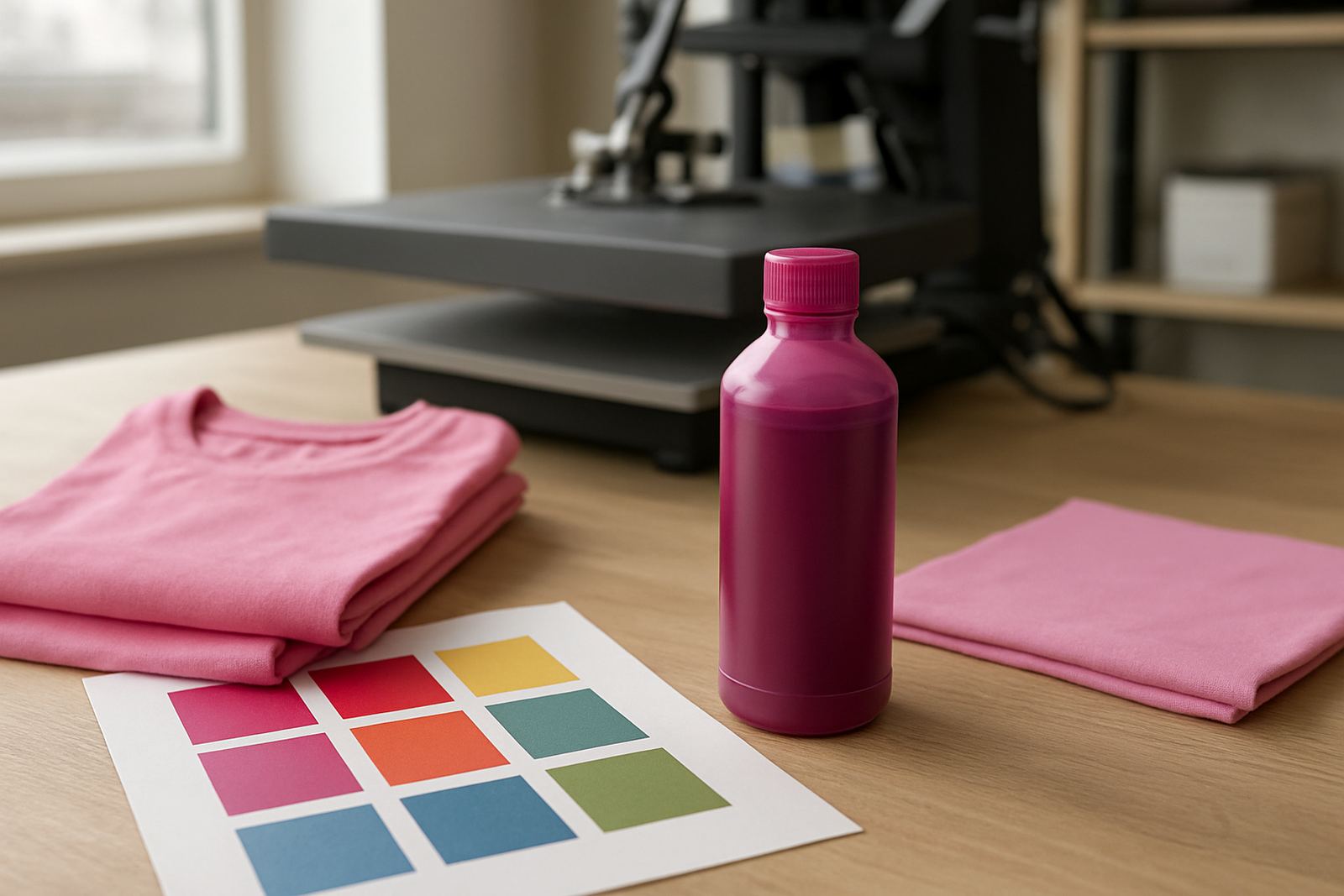
What the 250ml magenta ink is used for
This 250ml magenta ink is a dye-based sublimation ink made for transfer printing onto polyester garments, coated blanks and other suitable sublimation items. It is used where magenta needs to stay even, clean and repeatable across runs, whether you are producing sportswear numbers, promotional items, soft signage or short-run garment decoration. In practical terms, it helps keep reds, purples and skin-tone mixes steady when your production line is moving and you do not have time to fight colour drift.
For businesses in Johannesburg, Pretoria, Randburg, Roodepoort and wider Gauteng, this size suits shops that print often enough to need better stock control, but not so much that they want to open larger bulk containers every few days. It is also a sensible option for smaller operators testing colour on new media or managing several jobs at once. The 250ml bottle is easy to store, label and use in sequence with other colours.
- Designed for sublimation transfer work
- Suitable for desktop and wide-format printer setups
- Useful for garment decoration and related trade work
- Helps maintain stable colour output through regular cycles
Sizes, pack options and where this bottle fits
The 250ml bottle is a mid-sized trade option. It gives you more working time than a small trial bottle, but it still stays manageable on a busy bench. Many customers use it for colour replenishment, backup stock or as part of a mixed order with cyan, yellow and black. If you run a small workshop in Kya Sand or receive regular courier orders across the country, this size makes stock rotation easier and reduces the risk of running dry during a production week.
It suits print businesses that want a practical balance between cash flow and usage. You can keep a few bottles on the shelf for steady output, or order by job cycle if your demand changes from month to month. For trade accounts, the size also helps with forecasting because it is large enough to matter, but not so large that ageing stock becomes an issue. That is useful in South African conditions where heat and dust can affect storage areas if they are not managed properly.
- Pack size: 250ml per bottle
- Good for replenishment and regular production use
- Handy for mixed colour ordering
- Easy to store in sealed, upright containers
Compatible printer types and production settings
This ink is intended for sublimation printers and is commonly used in both desktop and wide-format systems, provided the printer is set up for sublimation use and the ink path is kept clean. It is suitable for shops doing garment decoration, sample production, screen print support work and transfer-based product branding. If you are working with a new machine or switching from a different ink type, a compatibility check is always worth doing before a full fill.
For best results, the printer should be in good mechanical condition with no blocked nozzles, excess air in the lines or old residue in the dampers. On some wide-format setups, daily use is the best way to keep flow stable. In smaller desktop units, regular test prints help prevent clogging, especially during winter mornings in Gauteng or in coastal areas where humidity can still affect storage and handling. If the machine is idle for a while, print a nozzle check before starting a production batch.
- Suitable for desktop sublimation printers
- Suitable for wide-format sublimation printers
- Works best on clean, properly maintained ink systems
- Useful for garment decoration and transfer production
Installation, handling and power needs
This ink does not need special power or gas connections. It is a liquid consumable that is handled during filling, priming and ongoing use. Installation simply means loading it into the correct ink system, priming where required and making sure the colour channels are matched properly. The main requirement is a clean working area, basic spill control and enough time to do the job properly. Rushed filling is where trouble starts, especially when operators are busy and trying to get a queue of orders out before courier collection.
Keep the bottle sealed when not in use and avoid leaving it open near dust, fibres or direct sun. In a Kya Sand workshop or warehouse, that matters more than people think because dusty floors and temperature swings can affect the work area. When printing in load-shedding periods, keep your printer and support equipment on safe power backup if needed, but the ink itself does not require electricity. If you are filling a system after downtime, check for settling and run a short test to confirm the colour line is flowing properly. A steady setup gives you better colur on the first pass.
- No power or gas connection required for the ink itself
- Use a clean filling area and proper colour labelling
- Prime the system carefully after installation
- Run a nozzle check after any downtime or refill
Care, servicing and colour consistency over time
To keep production steady, store the bottles upright, capped tightly and away from heat. Do not mix old and new stock in a way that makes batch tracking difficult. If you are running regular orders, rotate stock so the oldest bottle is used first. This helps avoid colour variation that can creep in over time. A clean ink path also matters, so flush lines and check filters when changing from one colour set to another or when you notice signs of drying.
For shops doing frequent work, basic servicing should include nozzle checks, line inspections and keeping print heads free of build-up. If a printer has been standing during a holiday period or a long weekend, it is wise to test before taking on a customer job. In many South African workshops, temperature changes and intermittent use are the main causes of colour inconsistency, not the ink alone. Good handling, regular tests and proper storage make a noticeable difference.
- Store upright in a cool, dry place
- Rotate stock by date where possible
- Keep lines and dampers clean
- Test after idle periods, power cuts or long weekends
What to check before you order
Before placing an order, confirm your printer type, the number of colour channels in use and whether your current setup is already running sublimation ink. If you are unsure, check the machine model, bottle format and any existing compatibility notes. It also helps to know how many prints you do in a normal week, because that tells you whether 250ml is your best fit or whether a larger stock plan makes more sense.
You should also think about the substrate you are printing onto, the turnaround time on your jobs and whether you need support for bulk order planning. If your business supplies schools, clubs, corporate wear or local resellers, consistency is usually more important than chasing a one-off bright sample. Our team can help with ink selection, compatibility checks, refill guidance and stock planning so you do not end up with the wrong bottle on site. We also help with courier coordination if you need orders sent to Sandton, Midrand, East Rand, Pretoria or further afield.
- Check printer compatibility before ordering
- Confirm the colour channels and fill requirement
- Plan for your weekly or monthly print volume
- Ask for help if you are changing ink types or media
Key facts
| Product type | Sublimation ink |
|---|---|
| Colour | Magenta |
| Pack size | 250ml |
| Printer use | Desktop and wide-format sublimation printers |
| Primary applications | Garment decoration, transfer printing, screen print support |
| Supply area | Kya Sand, Johannesburg with nationwide courier delivery |