Start With Real Weekly Output, Not Hopeful Forecasts
Most new print businesses in South Africa overbuy because they picture a busy month before the orders are there. A better way is to work backwards from the jobs you can actually complete in a week, then set stock around that number. If you are printing 20 T-shirts, a few mugs and a small batch of promo items, your ink use will be very different from a shop handling school events, club apparel and corporate work every day.
Write down the average quantity of each item you produce in a normal week. Then check how many millilitres each printer uses per job and how often you run test prints, nozzle checks and cleaning cycles. Those small maintenance jobs matter because they use ink too, especially when a machine has been standing over a long weekend or during load-shedding interruptions.
- Count your normal weekly orders, not your busiest month
- Include test prints and cleaning cycles in your usage estimate
- Keep separate figures for desktop and wide-format work
- Review the numbers after each month so your stock plan gets sharper
Match Bottle Sizes To Cash Flow And Storage Space
Ink stock should suit the size of your business and the space you have to keep it properly. A small operation in Kya Sand or Randburg might only need enough stock for one to two weeks, while a larger shop serving schools and sports clubs could need more to avoid stoppages. The point is not to keep a full cupboard just because it feels safe. The point is to keep enough on hand to finish the jobs you have already sold.
Heat, dust and humidity can all affect storage, so choose a clean indoor area away from direct sun and open floors where boxes collect grime. In coastal areas, moisture can be a concern, while inland areas such as Johannesburg often deal with dry air and temperature swings. Keep bottles sealed, upright and clearly labelled so your team knows what goes where. It sounds basic, but it saves mistakes.
- Buy in quantities that protect working capital
- Store ink in a cool, dry room and keep it off the floor
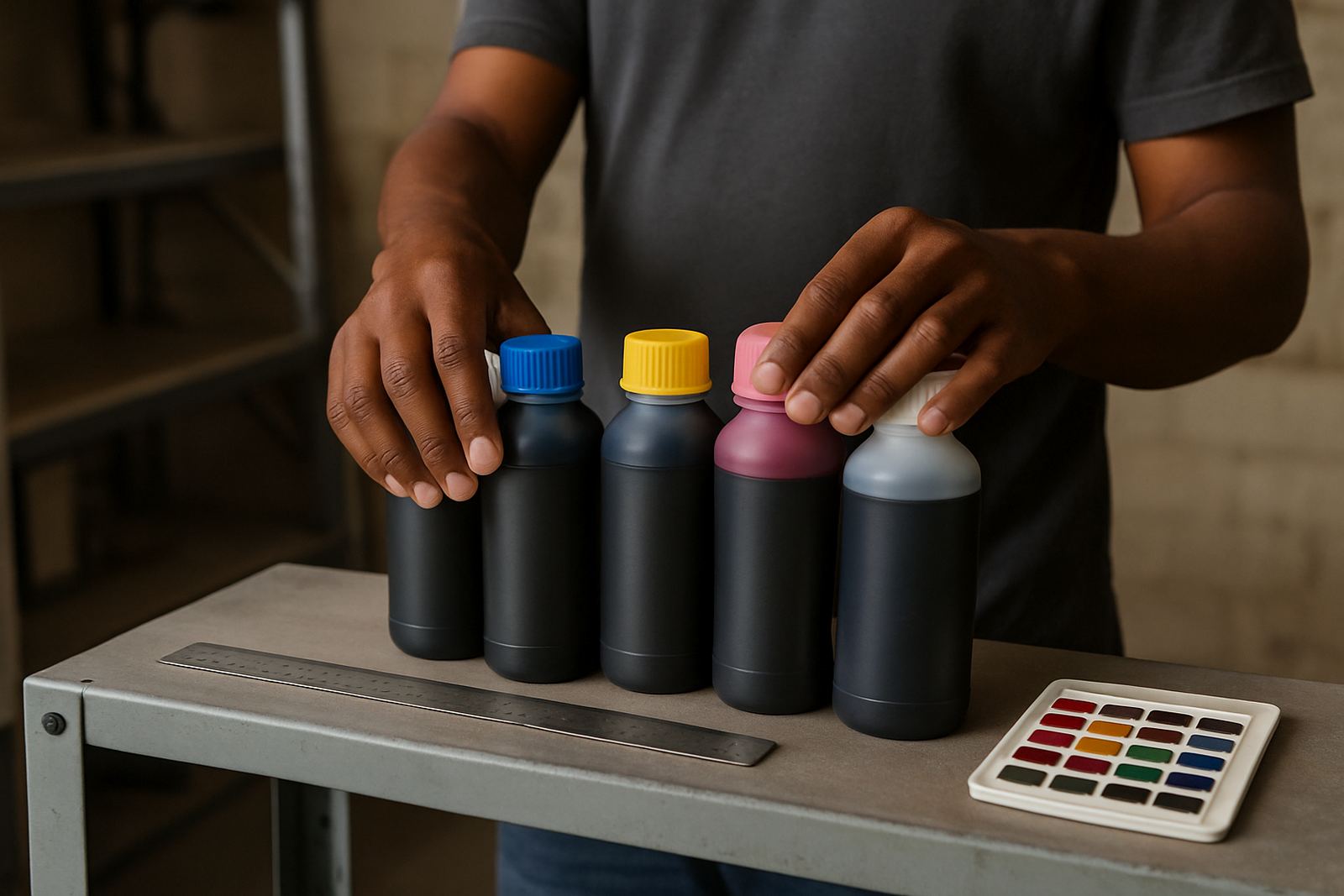
- Use clear labels for each colour and batch
- Do not leave opened bottles near windows or direct heat
Plan Around Printer Type And Job Mix
Desktop printers and wide-format printers do not consume ink in the same way, so you should never copy the same stock plan across both. Desktop units often suit small shops, startups and sample work, while wide-format machines are more likely to handle larger runs, banners, apparel transfers or repeat trade orders. If you keep both in the same workshop, your stock plan should show which machine uses what, and how fast.
For garment decoration, consistency matters. A customer may not care how much ink you used, but they will care if a reprint on Friday does not match the job from Monday. That is why it helps to choose ink that stays predictable across batches and supports line cleaning routines that keep the printer healthy. If you are using one machine for several product types, note which jobs need colour precision and which are more forgiving.
- Separate stock estimates for each printer type
- Track which colours move fastest in your shop
- Keep a small reserve for repeat orders and samples
- Record any colour shifts after maintenance or downtime
Use A Reorder Point, Not A Panic Purchase
Many new owners only reorder when a bottle is almost empty. That creates stress, especially when courier timing, weekend trading and municipal traffic delays get in the way. A better approach is to set a reorder point for each colour. When stock reaches that point, you place the order before you are under pressure. For a business in Pretoria, Midrand or the East Rand, that breathing room can save a job from missing its deadline.
Next-day courier to many South African areas makes this easier, but only if you order before you run dry. Keep a simple register of what is on hand, what is reserved for jobs, and what is already in use. That way your team is not guessing while a customer waits. It also helps when you are planning bulk work for a school term, a company launch or a sports season.
- Set a reorder point for each colour and size
- Count reserved stock separately from available stock
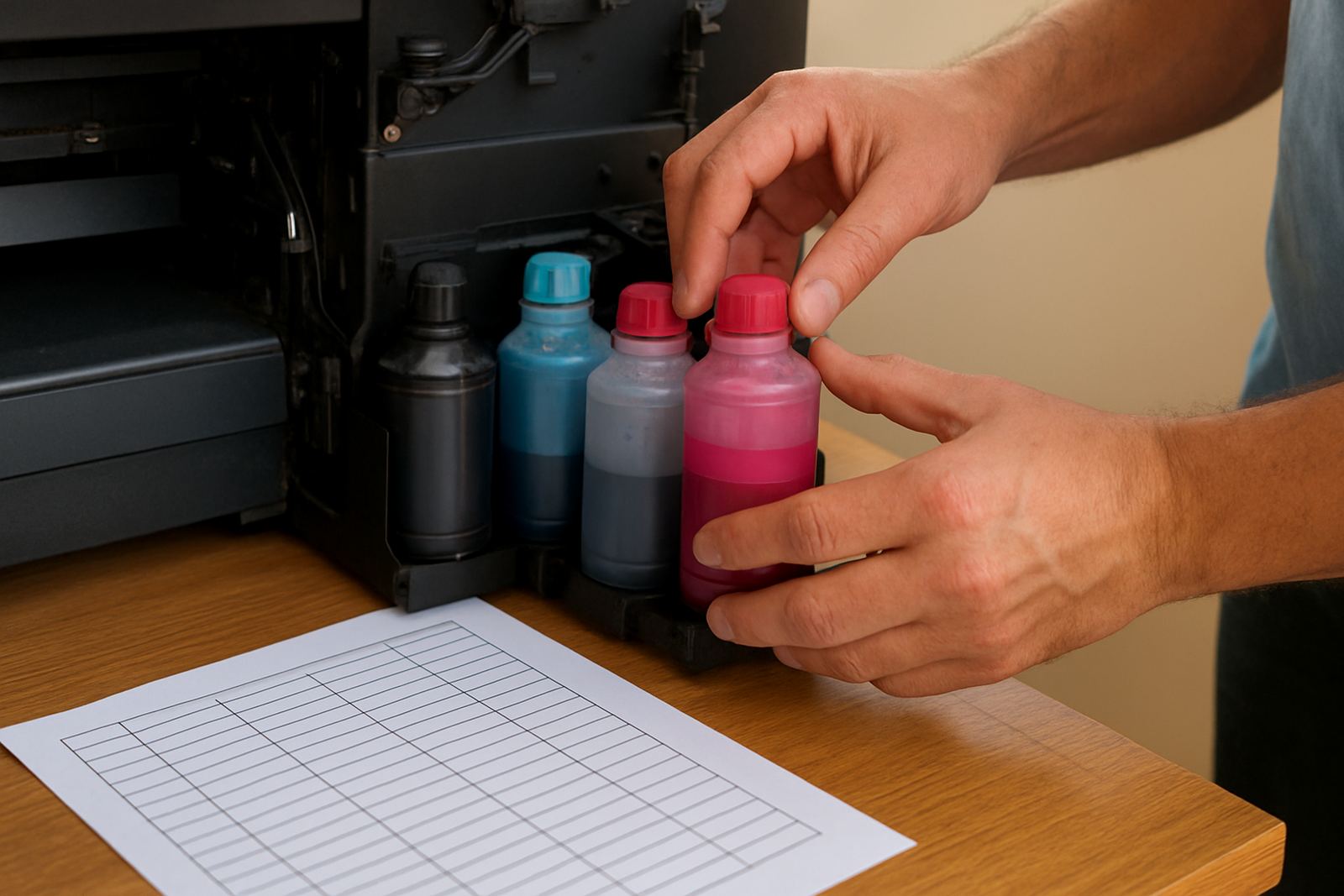
- Use a simple written log or spreadsheet
- Order before weekends, public holidays and busy periods
Build In Room For Testing, Training And Mistakes
Startup businesses often focus only on saleable output and forget that learning takes stock too. If you are training a new operator, checking colour profiles, or fixing a blocked line, you will use more ink than your production estimate says. That does not mean you are wasting stock. It means you are running a real workshop, not a perfect one. The best planning allows for those first few months when systems are still settling.
At our Johannesburg base in Kya Sand, we often see customers trying to cut stock too tightly when they are just starting out. They want to protect cash, which is sensible, but they also need enough ink to learn the printer, test garments and build a reliable workflow. The balance is simple: keep enough to stay operational, but not so much that money sits on the shelf for months.
- Allow extra stock for test prints and staff training
- Expect some waste while your workflow settles
- Keep a record of colour issues and nozzle cleaning frequency
- Review usage after each training or production change
A Practical Johannesburg Example For New Traders
Take a small print business in Kya Sand that decorates garments for local schools, church groups and small firms. The owner might start with modest weekly output and a tight cash budget. Instead of buying heavily across every colour, it makes more sense to keep the faster-moving colours in steady supply, then add reserve stock as orders become more regular. If a client in Sandton calls for a rush order, the business can still respond without overcommitting cash to slow stock.
That same business can also plan courier timing around trade days and month-end orders. If a bulk order lands on Tuesday, and the replacement stock is due Wednesday by courier, the owner still has room to complete the job. That kind of planning is what keeps small print businesses steady. It is not about carrying the most stock. It is about carrying the right stock for the work you actually do.
For new print businesses, ink planning is really a cash flow decision. The right balance keeps the machine running, protects margins and helps the shop grow at a pace it can afford.