Why fishing shirts are a good fit for sublimation
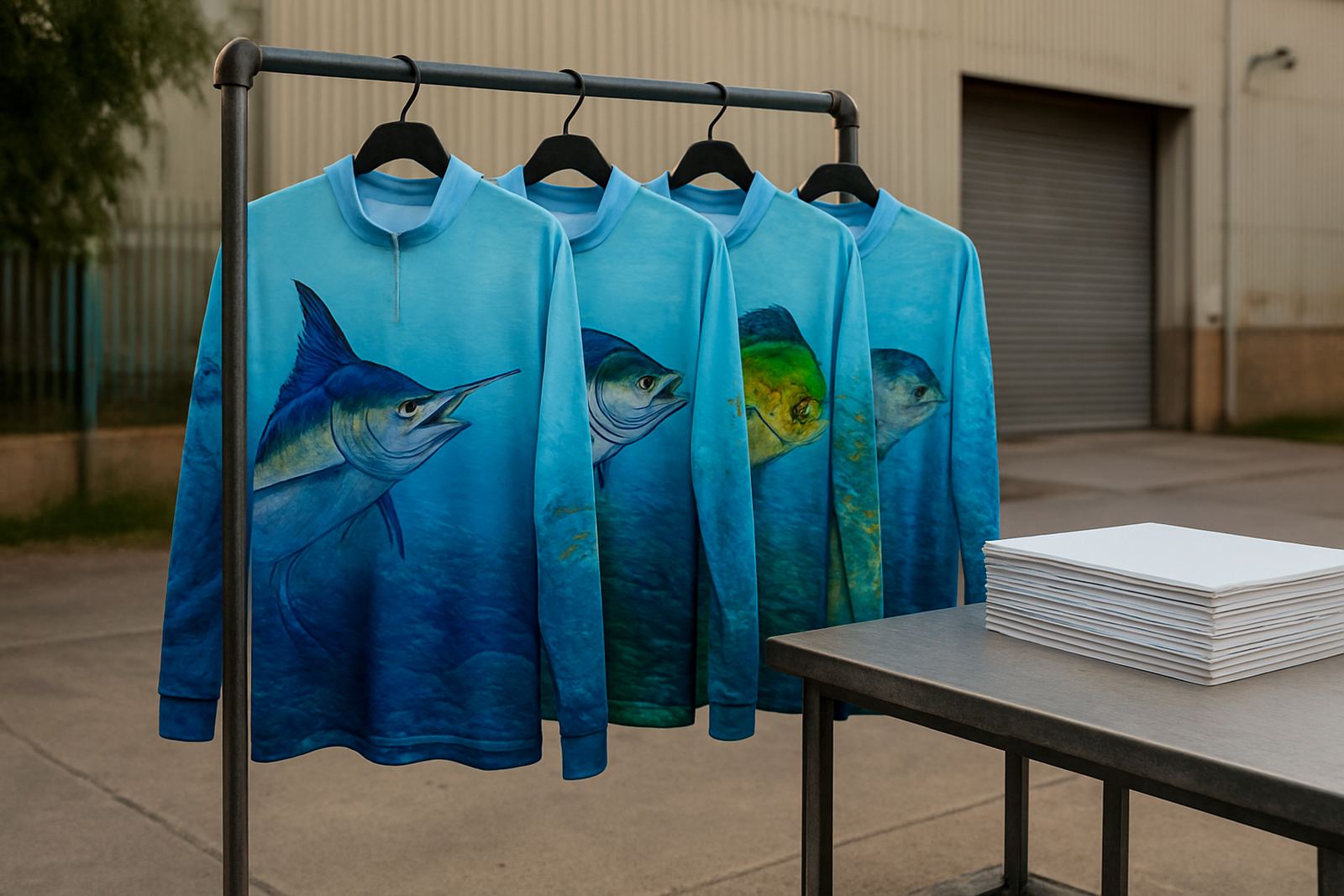
Fishing shirts are usually made from polyester or a polyester blend, which suits sublimation well. That matters because the ink bonds into the fibre rather than sitting on top of the cloth, so the print stays light to wear and does not crack after a few washes. For long-sleeve shirts used in hot inland conditions or humid coastal areas, that kind of finish is important. People want sun protection, a smart look, and branding that still looks clean after a full season.
In Johannesburg, Kya Sand and surrounding areas we often see orders for clubs, tackle shops, outdoor teams and promotional apparel buyers who need full chest panels, sleeve logos or back branding. These jobs often call for solid colour blocks, gradients, sponsor marks and personalised names. Sublimation ink gives you the range to handle those details without heavy hand feel.
Typical print setup for shirt work
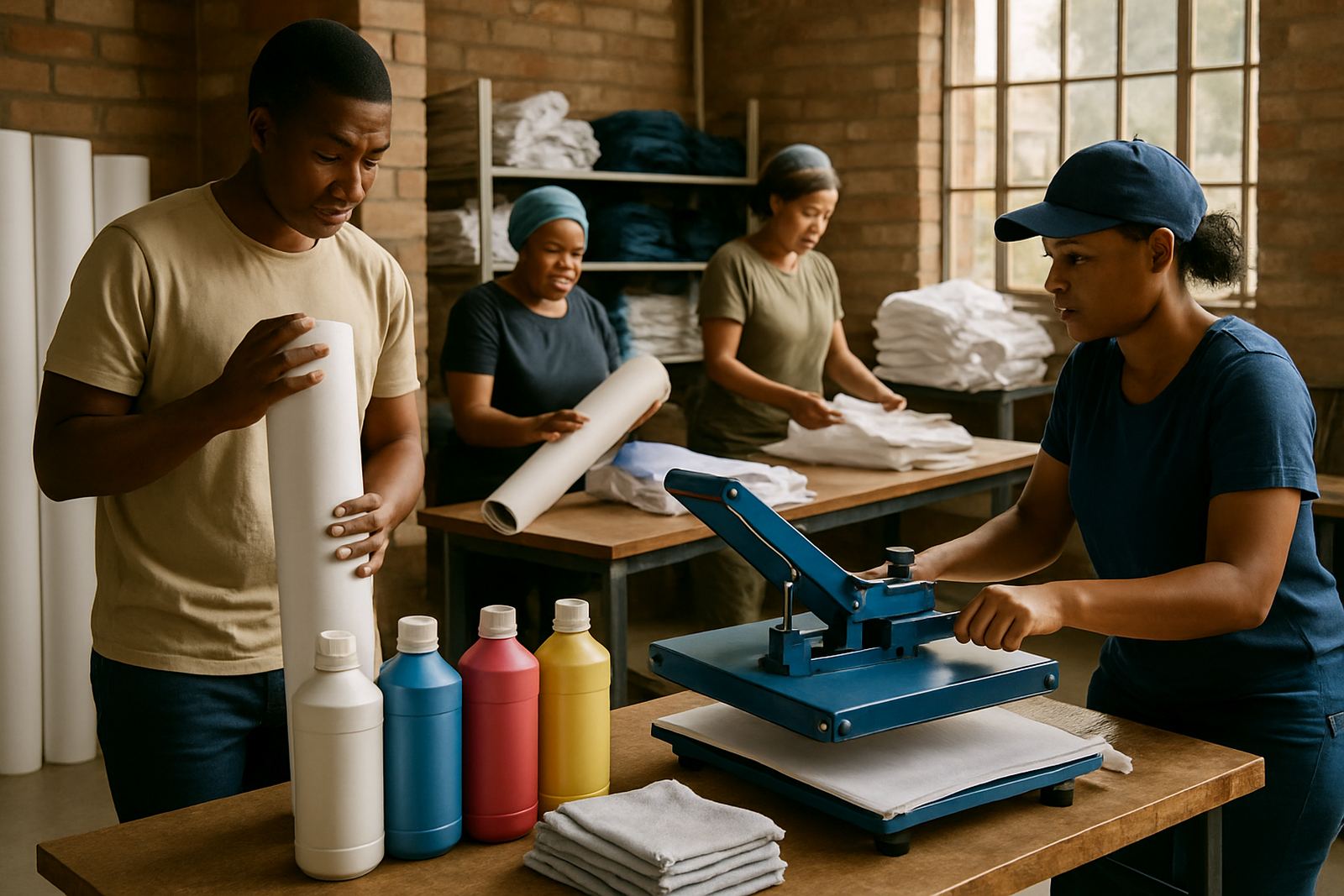
For fishing shirts, the common setup is a desktop or wide-format sublimation printer, transfer paper, heat press, and a good cutting or finishing workflow. Small runs may use a compact printer for sample work or short runs of names and logos. Larger clothing orders often need a wider printer for panel layouts, repeat designs, and better stock planning.
- Desktop printer for sampling, short runs and test panels
- Wide-format printer for larger artwork, chest panels and all-over repeats
- Heat press with even temperature control across the platen
- Quality transfer paper matched to the ink and garment type
- Basic line cleaning routine to prevent blocked nozzles and banding
Because load-shedding can interrupt production, many shops keep a schedule for nozzle checks and cleaning at the start of each shift. If a printer stands idle for too long, you can waste ink chasing missing lines later. That is costly on a shirt run where colour consistency matters across 20 or 200 garments.
Layout and planning for full-colour shirt designs
Fishing shirt artwork needs planning before anything goes to print. Long sleeves, collars, pockets and seams affect where a design can sit. A back panel can take a large scenic print, while the front chest usually works better with a logo and name. Sleeve marks should stay clear enough to read from a distance but not so large that they twist around the arm shape.
A good layout also considers the shirt size range. A print that looks well balanced on a medium shirt can look crowded on a 3XL if the artwork is not scaled properly. For trade customers, it helps to prepare separate size placements and save them as a set. That keeps the job consistent and reduces rework when a customer comes back for repeat stock.
- Keep important text away from seams, buttons and pocket edges
- Use high-resolution artwork for gradients, water scenes and sponsor logos
- Allow extra margin for sleeve curvature and body movement
- Check colour contrast against the garment base before running the full batch
Common mistakes that cost time and money
The biggest mistake is assuming all polyester garments behave the same. Some fishing shirts have tighter weaves, some are lighter in weight, and some carry coatings that change how the colour reads. A test print on one sample shirt is cheaper than redoing a batch of 60. Another common problem is using the wrong temperature or pressing too hard, which can flatten the fabric texture and affect the final look.
Another issue is poor stock planning. If a supplier takes a large order without checking ink levels, paper supply and printer maintenance, the job can stall halfway through. That causes missed delivery dates and extra courier cost. We also see colour shifts when customers mix ink batches without keeping notes. If you need repeat orders every month, record the settings and keep the same cleaning routine. It saves headaches later, and keeps the shirts looking matched from job to job.
Budget ranges for shirt production in Rand
Budget depends on whether you are starting small or running regular trade work. A small setup for fishing shirt samples and modest batches can begin around R15 000 to R35 000 if you already have a heat press and finishing tools. A wider production setup with better output control, backup consumables and room for volume work can move into the R45 000 to R120 000 range, depending on printer size and workflow.
For ink planning, smaller users often buy by the bottle or in mixed sets, while trade customers prefer bulk order support to manage cost per shirt. It is worth looking at the full job cost, not only the ink. Factor in transfer paper, power interruptions, reprints, courier movement and labour time. On a busy run, saving a few Rand on the wrong ink can cost far more in waste.
- Starter sampling and short-run work: from about R15 000
- Regular clothing production setup: around R45 000 to R120 000
- Ink planning for frequent orders: bulk purchasing usually lowers unit cost
- Always include wastage, test prints and courier timing in your budget
How we help trade customers in Johannesburg and nationwide
Our Kya Sand base supports trade buyers across Randburg, Roodepoort, Midrand, Sandton, Pretoria, East Rand and nationwide by courier. For fishing shirt work, that often means helping with ink selection, compatibility checks, colour troubleshooting and stock planning before the job starts. If a customer is setting up a new line, startup print advice and sample order assistance help reduce risk on the first production run.
Long-sleeve outdoor garments are unforgiving when colour is off or a line is blocked. We help customers match ink to their printer, check refill guidance, and keep the output steady for repeat orders. If you are printing for a sports club, lodge, tackle brand or promotional campaign, it pays to have a practical support process in place, especially when the deadline is close and the weather is hot.
- Ink Selection Help for desktop and wide-format printer users
- Compatibility Check before you buy or refill
- Colour Troubleshooting for faded, banded or uneven shirts
- Courier Coordination for next-day delivery nationwide
Customers reach us through the enquiry form on our contact page, which keeps the process neat for quotes, stock queries and repeat orders.