Start With a Known Reference, Not a Guess
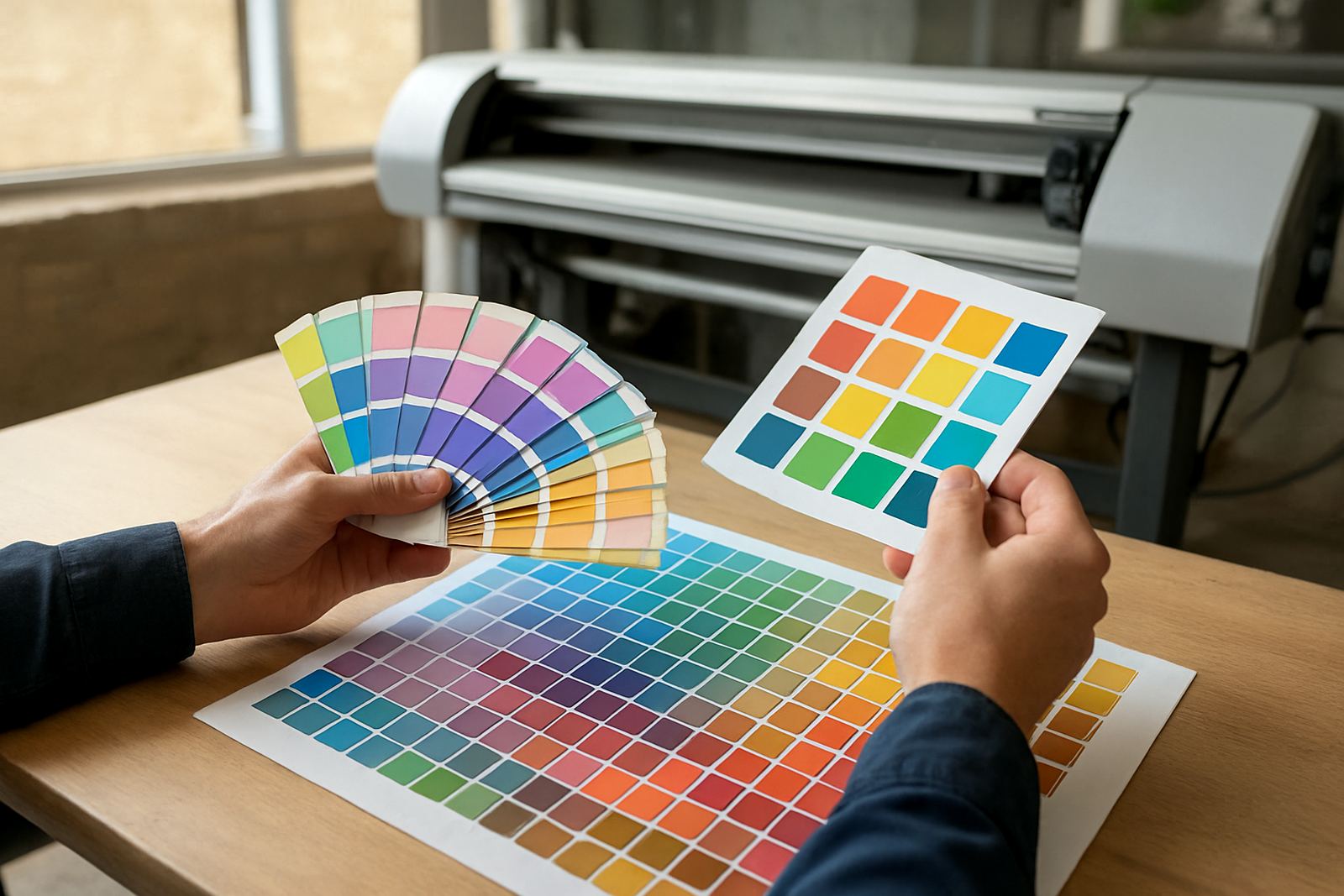
A colour check routine works best when you compare output against a fixed reference. That can be a standard sample print, a approved artwork file, or a repeat job you use every week. The point is to give your eye and printer something consistent to measure against, instead of relying on memory.
In a busy shop, drift can creep in slowly. One week the red looks a touch dull, then the yellow starts leaning warm, and before long you are matching by feel instead of by evidence. Keep the same paper, same ink set, same settings and same printer whenever you can. If one of those changes, note it immediately so you know what caused the shift.
In Kya Sand and surrounding industrial areas, dust and temperature swings can affect machines faster than many owners expect. Even in a sealed room, a printer sitting near a roller door or under a ceiling fan can behave differently from one kept in a stable corner.
Check Nozzle Health Before You Check Colour
It is hard to judge colour accurately if the nozzles are not firing properly. Streaks, banding and missing channels can make a good ink set look faulty when the real issue is maintenance. A quick nozzle check before the first run of the day gives you a cleaner baseline.
If you see light gaps or broken lines, deal with that first. Do not try to correct colour on top of a mechanical problem. Clean the head, confirm the line is clear, and make sure the ink paths are flowing without air. On many desktop units, a small blockage can show up as a colour change in just one channel.
- Run a nozzle pattern before any client order with strict colour limits.
- Check for banding after long idle periods or a power cut.
- Look at the same test image under the same light every time.
- Record any missing lines, even if the print still looks usable.
Use the Same Lighting Every Time
Colour can look right under one light and wrong under another. That is why routine checks should happen in a fixed space, with the same lighting every time. Natural light near a window can shift during the day, and fluorescent fittings can make blue or green tones look different from what the customer will see later.
A practical approach is to create a small check station in the print area. Keep a sample board there and compare each test print at the same time of day if possible. If your business handles garment decoration for corporate clothing, school wear or event items, this matters even more because customers often compare bulk items side by side.
For businesses in Johannesburg, Pretoria and Midrand, load-shedding adds another layer. When the power returns, machines and room temperature can change quickly. That first print after an outage should always be checked before you resume a large run.
Build a Weekly Colour Check Sheet
You do not need a complicated system. A simple written sheet can keep your checks consistent and easy to follow. The aim is to spot patterns, not to create admin for the sake of it. Write down what you printed, what you noticed, and what action you took.
Over time, your notes will show whether a shift is linked to a specific printer, a certain stock batch, or a change in room conditions. That helps you avoid repeat mistakes and keeps your team on the same page. If more than one person runs the machines, the sheet also helps prevent one operator from blaming another for a problem that started earlier.
- Date and time of the check
- Printer used and ink set loaded
- Paper or transfer stock used
- Observed shift, if any
- Action taken, such as cleaning, flushing or reprinting
Match Checks to the Kind of Work You Produce
Not every job needs the same level of scrutiny, but some orders deserve closer attention. A single sample for a small startup is different from a bulk garment run for a school, team or promotion. In both cases, the colour still needs to hold steady, yet the risk changes with the size of the order.
If you are printing repeat logos, skin tones, brand colours or fine gradients, check earlier and more often. These are the jobs where small drift becomes obvious fast. Wide-format printers may also show slight variation across the print width, so it helps to inspect both the left and right sides of the sheet, not just the centre.
For screen printers who sub out parts of a job to sublimation, consistency between print batches is just as important. A darker batch on Monday and a lighter batch on Wednesday can create problems once the garments are pressed and packed.
Local Example: A Randburg Shop That Caught Drift Early
A small print shop in Randburg might run transfers for sportswear, mugs and short garment runs in the same week. One Monday morning the operator notices that the magenta in a test print is slightly weaker than the sample kept on the wall. The job still looks acceptable at first glance, but the check routine flags the change before 40 shirts are printed.
After a nozzle test and a quick line check, the team finds a minor air issue in one channel. It takes a short clean cycle and a fresh test print to bring the colour back in line. Because they caught it early, the shop avoids reprints, keeps the customer happy and does not burn through stock. That kind of result is not luck, it comes from a habit of checking before problems grow.
For businesses serving Sandton, Roodepoort or the East Rand, the lesson is the same. A five minute routine can protect a full day’s production if you use it consistently.
When to Ask for Help Instead of Pushing On
Some colour shifts are simple to correct, but not every issue should be handled by guesswork. If the same change keeps returning, or if one printer behaves differently from another using the same file, it is time to step back and review the setup. The problem may be in the ink choice, compatibility, line condition or even how the job is being stored after printing.
It also helps to review stock planning. If you are running low and swapping batches often, your checks become harder to trust. Keep enough ink on hand for a full cycle of work so that your comparisons stay meaningful. When you do need guidance, use a proper compatibility check, refill guidance or colour troubleshooting process rather than forcing a quick fix that causes more waste later.
Routine checks are not about making the process slower. They are about making it safer, cleaner and more predictable, especially when customers expect sharp colour from the first sheet to the last. That is the difference between reacting to a complaint and preventing one.