Why packaging matters before the van even arrives
Sublimation inks are not difficult to courier, but they do need proper packing. Bottles can shift during sorting, lids can loosen with vibration, and a carton that is too large lets the contents move around too much. In Johannesburg traffic, then on the long line-haul to another province, that movement adds up fast.
For trade customers, packaging is not just about neat presentation. It protects stock value, helps keep batch numbers and product labels readable, and reduces the chance of a claim if a parcel is delayed or handled roughly. It also saves time when a busy print shop is receiving multiple cartons in one week and needs to check stock quickly.
At our Kya Sand base, the packing standard is simple: stable, sealed and easy to identify. That means the outer carton should suit the order size, the inner packing should stop movement, and the label should stay visible even if the box gets dusty or wet on a depot floor.
How to pack bottles so they stay upright in transit
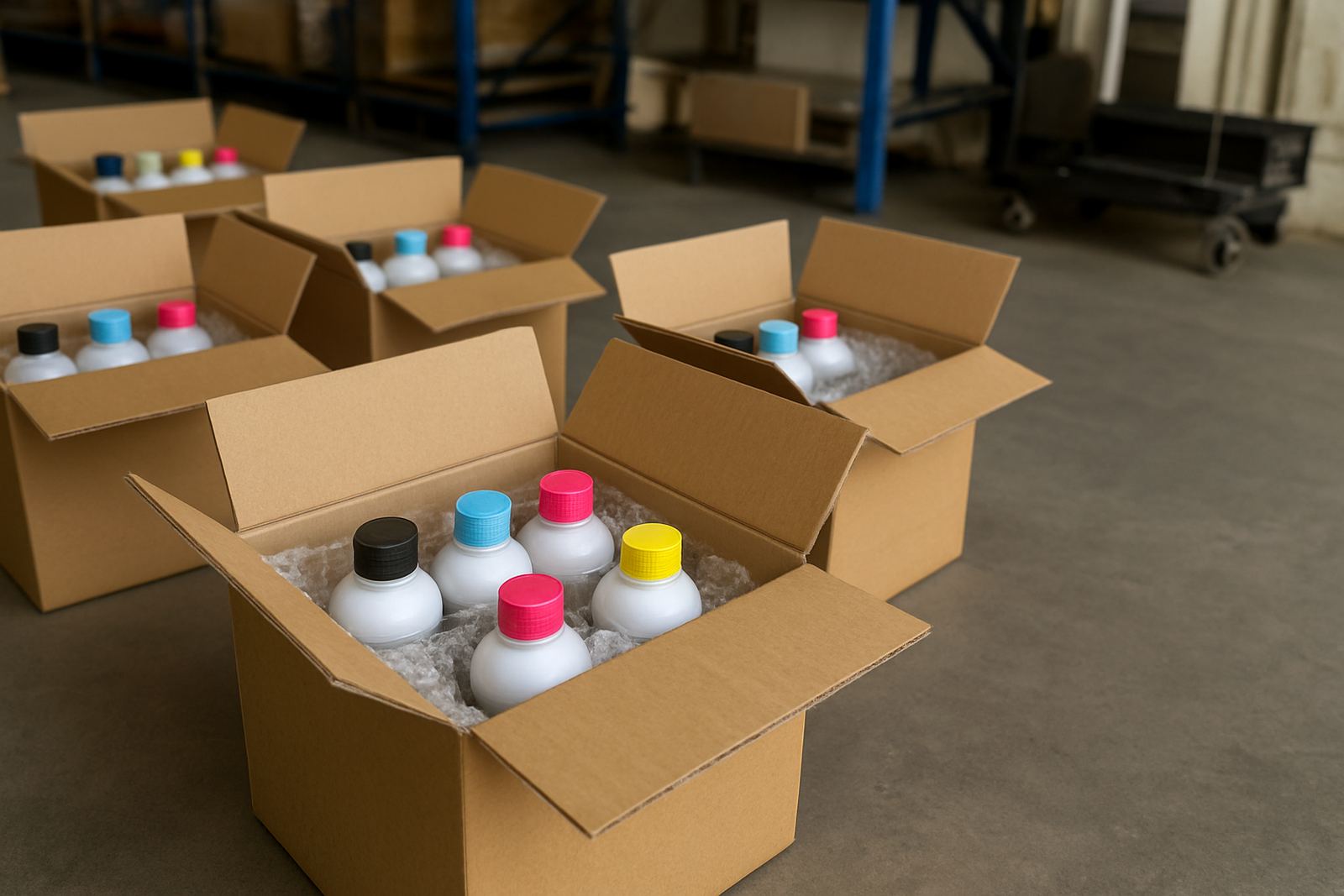
The safest method is to keep each bottle upright and separated from hard edges. A tight fit is better than a loose box, but there must still be enough protection for bumps and stacking pressure. For courier shipments across South Africa, especially on routes that include multiple depot transfers, the small details make a real difference.
- Use a carton that matches the order size, not an oversized box.
- Seal bottle caps and check that tamper rings or lids are secure.
- Wrap each bottle so it cannot knock against another bottle.
- Fill empty spaces with protective material so the contents do not slide.
- Keep heavier cartons on the bottom when stacking in the warehouse or vehicle.
If a parcel leaves Johannesburg on a Thursday afternoon and lands in Bloemfontein the next day, it may be handled more than once before it reaches the customer. Good internal packing keeps the bottles steady through all those handovers. That matters even more in warmer inland areas where a parcel can sit on a loading bay for a while before dispatch.
What labels, paperwork and marks should be on the carton
Clear marking helps the courier and the receiving team. A carton should show the sender and receiver details plainly, along with any handling notes that matter for ink. If stock is being sent to a print room in Sandton, a workshop in Roodepoort or a reseller in Pretoria, the label needs to stay readable from collection to delivery.
It also helps to keep the paperwork simple and accurate. The parcel description should match the contents, and the quantity should be easy to confirm. If there are sample packs, mixed colours or bulk order cartons, a neat internal note can save time when the customer checks the delivery against the order.
- Mark cartons with the correct delivery area and contact person.
- Keep the packing list on top, inside a clear sleeve if possible.
- Use handling notes where needed, such as upright storage or fragile contents.
- Avoid old labels from previous shipments on the outside of the box.
Couriers move fast and sorting staff are looking at many parcels in a shift. A label that is easy to read reduces the chance of the box landing in the wrong pile, and that is often where delays start.
Packing for load-shedding, heat and coastal humidity
South African conditions are not all the same. A package going to Cape Town faces a different climate from one heading to Rustenburg or Nelspruit. Coastal humidity, inland heat and long storage periods at depots can all affect how a carton holds up. That is why the outer pack should be dry, firm and properly sealed.
Load-shedding can also affect warehouse timing. When packing and dispatch happen around power cuts, it is worth using a process that does not rely on last-minute sorting. Labels should be printed early, cartons should be ready before collection and stock should be checked before closing the box. One missed step can create a delay that could have been avoided.
For customers receiving regular ink supply, consistent packaging helps with stock planning. If every carton arrives in similar condition and format, it is easier to store it on racking, count it at intake and move it into production without extra handling. That matters in smaller shops where space is tight and in larger operations where pallets are being turned over quickly.
The local example: a Kya Sand order headed nationwide
A typical order from our Johannesburg base might go to a garment decorator in Gqeberha, with a second box sent to a screen printing shop in Pietermaritzburg. The order could include different bottle sizes, sample colours and refill stock for a busy week ahead. If that parcel is packed well, the customer receives stock ready for use, with less sorting at the other end.
In practice, that means the carton is chosen to fit the order closely, the bottles are protected from movement, and the box is sealed so it can cope with depot handling. The delivery team in Kya Sand can then hand the parcel to the courier with confidence that it is ready for the road.
For customers using next-day courier where possible, good packaging also helps keep the schedule on track. If there is a problem at intake, such as a loose lid or torn carton, the delay can affect the whole print run. A small packing habit can prevent a much bigger production problem later on.
Practical checks before you hand the parcel to the courier
Before any ink shipment leaves, a short check is worth the time. Trade customers often want speed, but speed is only useful if the order arrives intact. A few minutes at dispatch can save hours later if the parcel is rejected or damaged in transit.
- Confirm the order contents against the invoice or packing list.
- Check that every lid is tight and every bottle is clean on the outside.
- Make sure the carton is fully sealed on all edges.
- Test the box for movement by gently shaking it, if the contents shift add more protection.
- Confirm the delivery area and contact details are correct before collection.
If the box looks tired, replace it. A strong carton is not expensive compared with the cost of a damaged delivery or a missed print deadline. For businesses in Randburg, Midrand, East Rand and beyond, that extra care helps keep the supply chain steady.
Packaging that supports trade stock control
Courier-ready packaging is not only about the trip between cities. It also supports better stock control at the buyer’s side. When cartons are packed in a repeatable way, the receiving team can count, shelve and issue stock faster. That is useful for startup printers, growing garment decorators and established trade customers alike.
It also makes reordering easier. When a customer knows how a standard carton arrives, they can plan storage space and understand how much stock will fit into a shelf, cupboard or storeroom. That kind of planning matters when turnover is steady and the next order is already being discussed.
Good packaging is really a service step, not just a shipping step. It helps the ink travel safely, supports faster receiving, and keeps the focus where it should be: on clean, accurate printing with fewer disruptions.