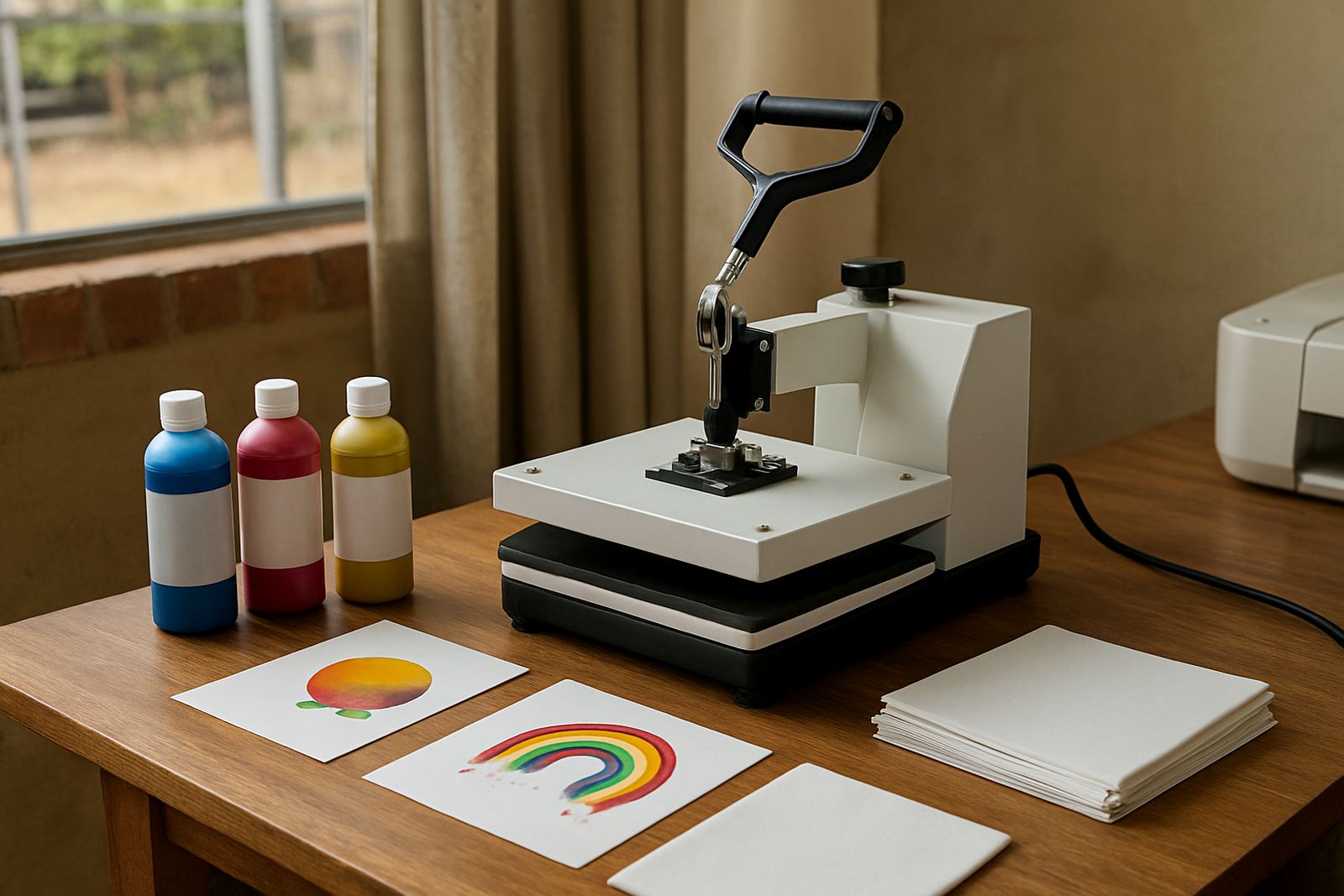
Where downtime usually starts in a print room
In garment decoration and screen printing, the press is often blamed first when output slows down, but the real problem is usually earlier in the process. A skipped nozzle check, an empty ink bottle, the wrong ink for the printer, or a last-minute colour adjustment can stop a shift fast. Once one machine is waiting, the whole team starts losing time.
For many South African print businesses, the pressure builds on Mondays, after public holidays, and again during month-end when rush jobs land together. If you are running from Kya Sand to Randburg, Roodepoort or Sandton, or shipping to other provinces, you cannot afford to treat ink as something to sort out later. Downtime costs more than labour. It affects collection times, customer trust, and how much work you can push through in a week.
Keep the right ink on hand before the job lands
Stock discipline is one of the simplest ways to reduce avoidable stoppages. Keep enough ink to cover your normal weekly usage, plus a safety buffer for urgent orders. In Johannesburg, that buffer matters even more when traffic, load-shedding or supplier delays interrupt the day. A business that runs out of black or cyan on a Thursday afternoon often loses the whole batch, not just one print run.
Set reorder levels for each colour and each printer type. Do not rely on memory, because busy seasons and staff changes make that unreliable. Keep a simple check list by the storage area and update it daily. If you manage more than one site, align the stock counts before a batch goes out so the wrong bottle does not end up at the wrong printer.
- Track stock by colour, not just by total litres.
- Separate desktop and wide-format ink clearly on the shelf.
- Keep a reserve pack for urgent same-day work.
- Check expiry dates and batch consistency before large jobs.
- Record usage after every shift, not only at month-end.
Prevent clogs and line issues with routine care
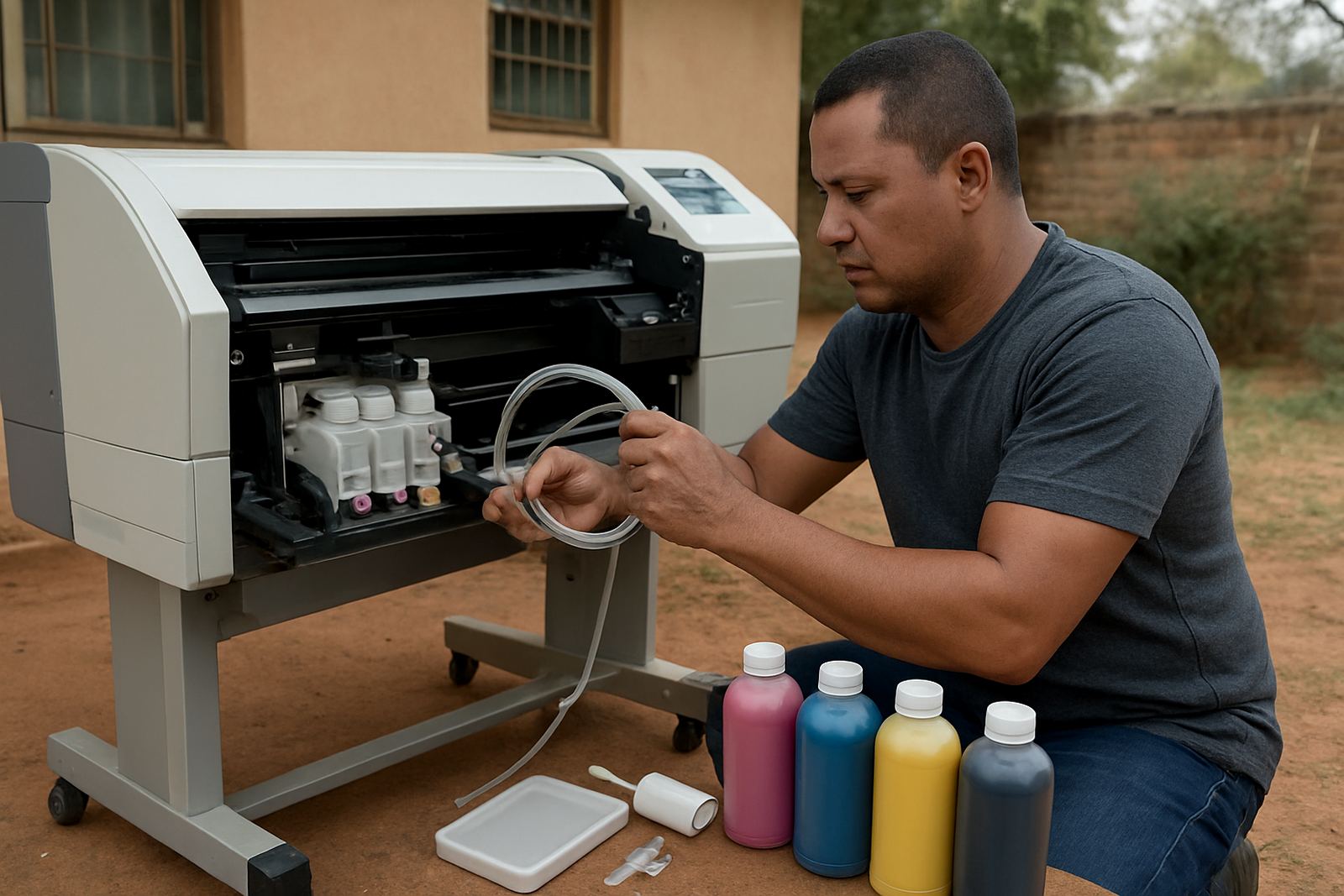
Most print interruptions caused by ink are not dramatic. They start with dried nozzles, sediment in the line, or an operator noticing a colour shift too late. Regular cleaning is cheaper than reprinting a full run. It also protects the print head, which is one of the most expensive parts to replace. In coastal areas, humidity can affect storage conditions, while in Gauteng dust and temperature swings can still cause problems if bottles are left open or lines are not sealed properly.
Build a short maintenance habit into the shift rather than waiting for trouble. Clean caps, check hoses, agitate stock where needed and run a test pattern before a production run begins. If a line is acting up, do not keep pushing through hoping it will clear on its own. That is how a small fault becomes a wasted day.
- Run a nozzle check at the start of the day.
- Wipe caps, wipers and any ink contact points daily.
- Keep lids sealed and bottles stored upright.
- Flush lines according to the printer’s working pattern.
- Log recurring colour shifts so the cause can be traced.
Colour stability saves more time than rework
Colour problems are a hidden source of downtime because they look like a creative issue, not a production issue. But every extra test print, every adjustment and every rejected sample uses time, ink and material. When a garment batch must match an approved sample, consistency becomes part of your schedule. A poor match can hold up cutting, pressing and dispatch all at once.
Keep a clear reference for common colours and test results so your team does not start from scratch every time. If your job list includes schoolwear, sportswear or promotional garments, standardise the process for each repeat order. That way the person on shift can follow the same settings and avoid long colour hunts. Small notes in the job file can prevent a long afternoon of guesswork.
How a Kya Sand print shop stays ahead of urgent orders
A common example is a print shop in Kya Sand that handles mixed work for local resellers and walk-in trade customers. On paper, the team has a full order book, but one bottle runs low on a Thursday and nobody notices until the next morning. The operator spends the first hour checking stock, then another hour chasing replacement ink, and the courier only arrives the following day. That one miss can push a Saturday collection into next week.
A better routine is to check stock every afternoon, plan courier collections before the last hour, and keep urgent reserve stock on site. For businesses serving Randburg, Midrand, Pretoria and the East Rand, next-day courier coordination helps, but only if the order is placed early enough and the team knows what is needed. Good stock planning keeps production moving even when the week gets messy.
A practical downtime checklist for busy trade counters
Downtime is easier to control when one person owns the checks and everyone else follows the same routine. That does not mean creating more admin. It means keeping a simple system that works during a power cut, a courier delay or a sudden order spike. The best plan is the one your team can follow on a busy Tuesday without stopping to ask three people for confirmation.
Use this as a working checklist for day-to-day control:
- Confirm ink levels before opening the production area.
- Match the ink to the printer and the job type.
- Test print before the first full run of the day.
- Keep cleaning supplies close to each machine.
- Hold a small buffer stock for urgent jobs and repeat orders.
- Review any stoppages at the end of the shift so the same issue does not return.
When stock, maintenance and colour control are handled early, the print room runs with fewer interruptions and less waste. That is what protects margins, especially when customers expect fast turnaround and consistent results.