Why the trip from pallet to refill station matters
Sublimation ink is sensitive to handling long before it goes into a desktop or wide-format printer. A bottle that gets shaken hard, left in a hot van, or stored next to cleaning fluids can still look fine on arrival but behave badly later, with inconsistent flow, colour drift, or blocked lines. That is why the warehouse-to-workshop path needs as much care as the print settings.
In practice, the goal is simple: keep each batch traceable, keep the caps sealed, and keep the ink within a sensible temperature range. If a shop in Kya Sand receives stock in the morning and uses it that afternoon, it still helps to let the bottles settle before opening them. Small habits like that protect colour accuracy and make it easier to track any issue back to one batch rather than guessing across the whole store.
Receiving stock without losing traceability
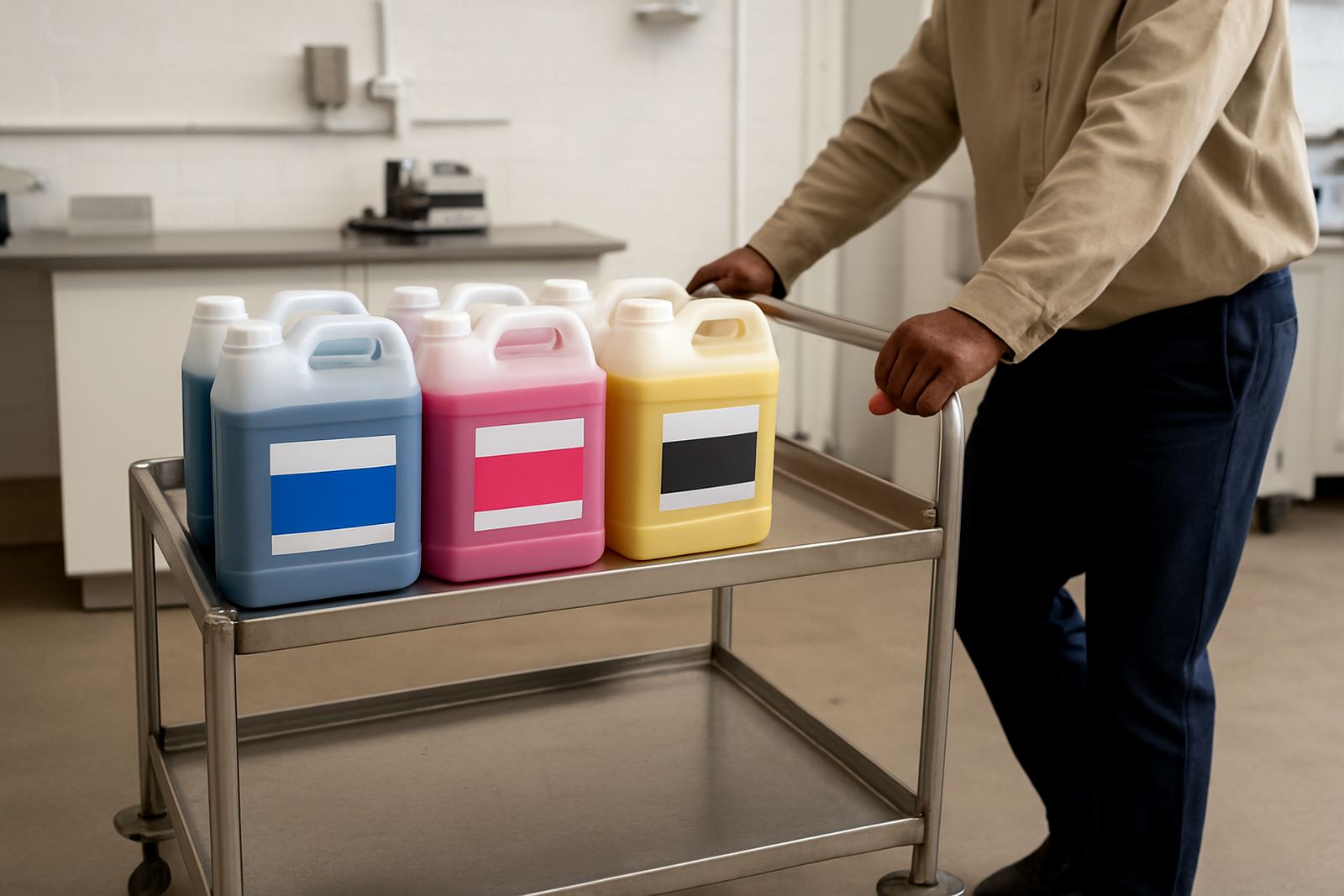
Once a courier delivers ink, the first step is not rushing to refill tanks. It is checking the carton count, batch details and seal condition. A proper receiving routine helps when a customer asks why one job printed slightly different from the last. You can trace the stock, check when it was received, and match it to the printer it was used in.
- Confirm the number of bottles against the invoice or order note
- Check for leaks, bulging caps, cracked seals or damp cartons
- Record the batch or lot reference before the carton goes into storage
- Mark partial cartons so they are used first and not forgotten
- Separate fresh stock from returns or samples to avoid mix-ups
That kind of discipline matters in Johannesburg where deliveries may move through traffic, heat and a few handovers before reaching the workshop. If you sell to trade customers, the extra few minutes spent on receipt can save hours later when a line needs troubleshooting.
Storage conditions that suit South African print rooms
South African print rooms are not always climate controlled. In summer, a workshop in Randburg or Midrand can heat up quickly. In winter, a warehouse in Pretoria may feel dry and cold in the morning, then warm up sharply by midday. Ink does best in a stable space, away from direct sun, open windows and dusty floors.
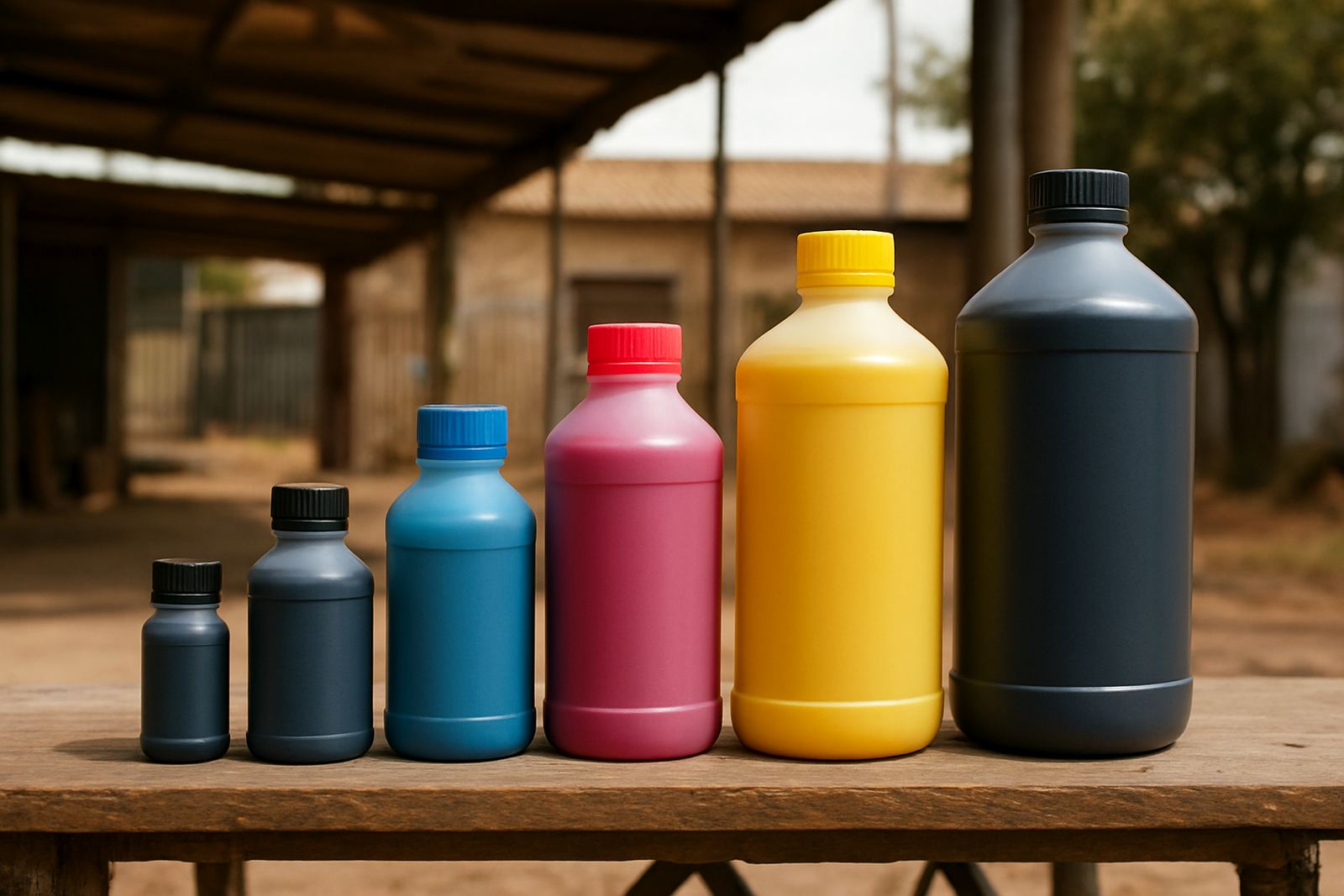
Keep bottles upright on shelving, not on the floor where they can pick up moisture or dust. Avoid storing them near compressors, heaters or machines that vibrate. Coastal humidity is another issue for shops that ship across the country, because a carton that sits in damp storage can soften and become harder to handle cleanly. If load-shedding affects the site, keep the storage area orderly so staff can still find the right batch with a torch if needed, without opening unnecessary boxes.
A simple storage routine also helps with stock planning. If older cartons are placed at the front and newer stock at the back, the workshop is less likely to open a fresh bottle when an older one should have been used first.
Refill station habits that protect print quality
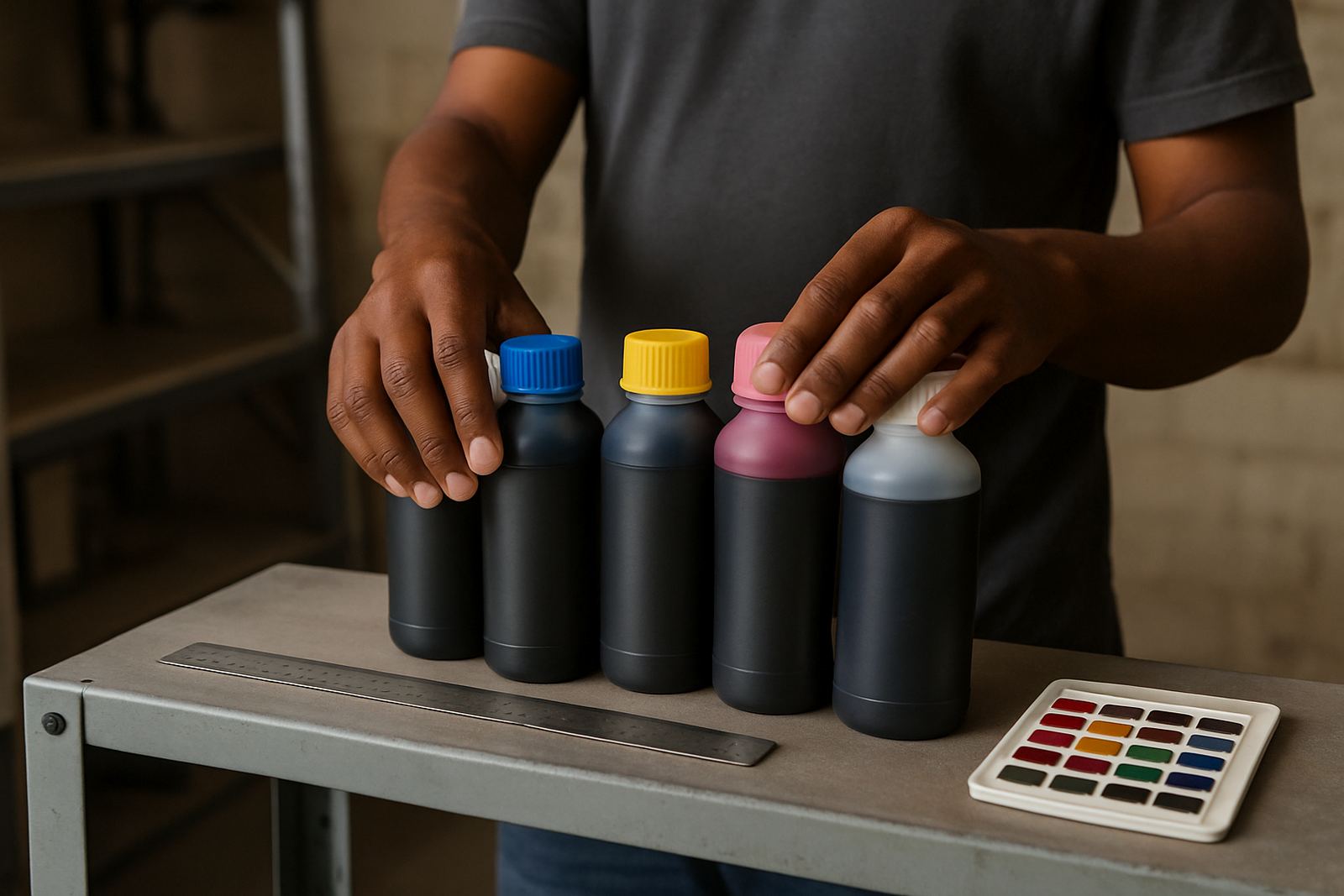
The refill station is where good handling becomes visible. This is the point where caps are opened, lines are topped up, and any contamination can move straight into the printer. Clean funnels, dedicated measuring cups and labelled cloths all matter. Even a small spill on the rim can travel into the machine if the bottle is hurried back into service.
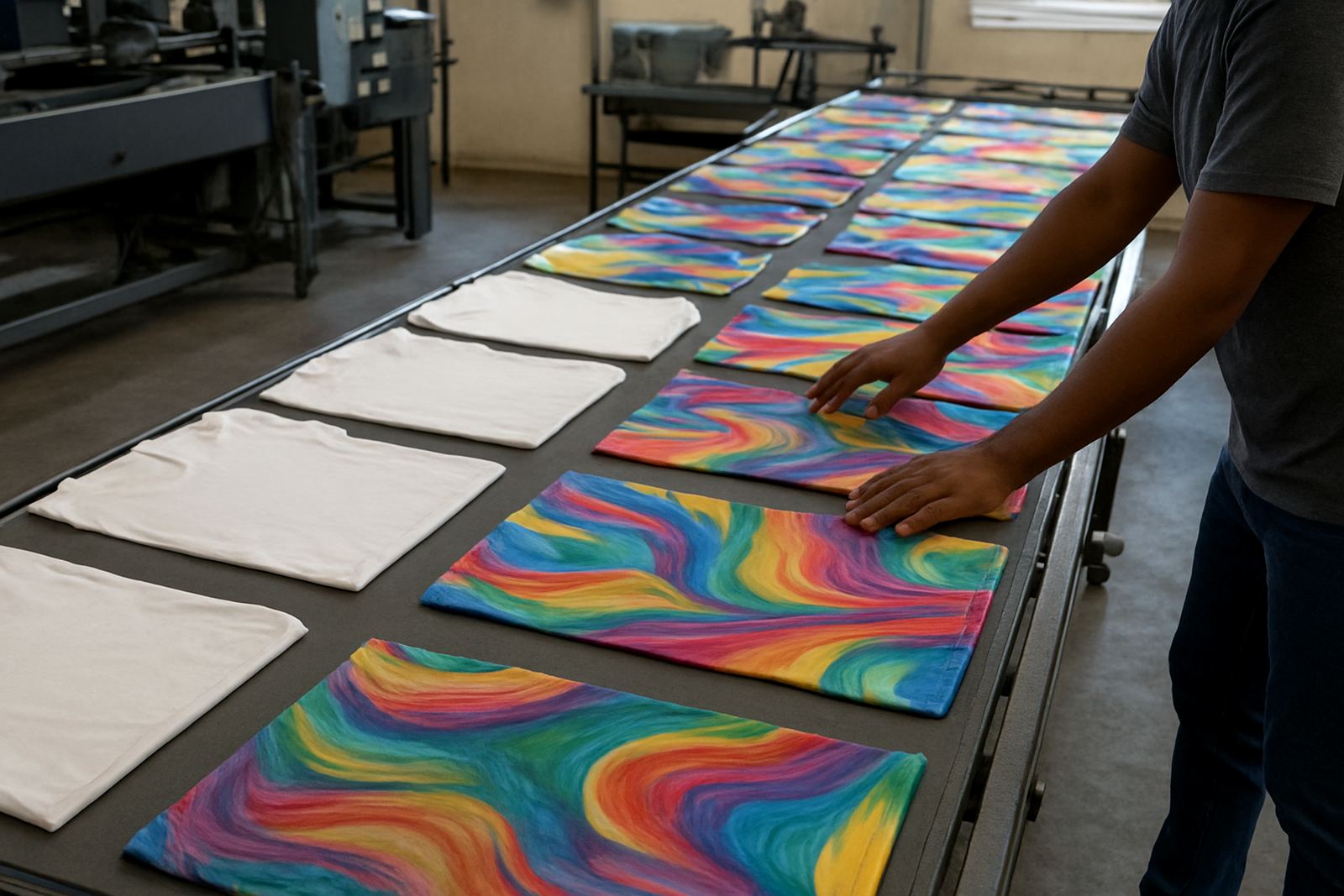
For shops doing garment decoration or screen printing support work, consistency is everything. One bottle should not be topped up from another unless the batch is known and compatible. Mixing stock without checking can make a colour shift show up on a run of shirts or transfer paper. Pieter and the technical team often advise customers to keep one clear process for each printer, then follow it every time so the workshop does not depend on guesswork.
- Wipe bottle necks before and after pouring
- Use separate tools for each colour where possible
- Do not top up from bottles of unknown age or origin
- Keep printer caps closed between jobs
- Flush line cleaning waste into the correct container, not the sink
Courier movement across Johannesburg and beyond
When stock leaves Kya Sand, it may be heading to Sandton, Roodepoort, the East Rand or straight onto a nationwide courier run. The journey is usually short for local delivery, but the handling still needs to be careful. Bottles should be packed upright, cartons secured so they do not knock together, and fragile items clearly marked for the run. A courier bag that falls over in transit can do more damage than a long road trip if the packaging is poor.
For next-day courier orders, good packing keeps the product ready for use when it arrives. That matters for trade customers who are planning a job around stock coming in on Tuesday and going out on Wednesday. If a workshop in Pretoria is waiting on a refill to finish a production run, any delay in packing or labelling can push the whole schedule back.
Our logistics team watches this part closely because traceability starts the moment an order is picked. Once the carton leaves the warehouse, the workshop still needs to know exactly what arrived and when. That is especially useful for bulk orders where several bottles of the same colour may be split across multiple printers.
A Kya Sand example: how one small check saves a full day
A local print shop in the Kya Sand area may receive a mixed order of bottles for a desktop machine and a wide-format unit on the same morning. If the cartons are checked as soon as they arrive, the team can label the bottles, put the older batch to the front, and allocate each colour to the right machine before lunch. If they do not, a bottle can sit on a shelf, get opened weeks later, and then no one remembers which job it was meant for.
That is when problems start. A refill may be mixed into the wrong system, a colour may look dull on the next run, or a technician may spend time checking lines that were never the issue. In a shop that works under municipal noise rules, power cuts and tight turnaround times, nobody wants that kind of waste. Good handling from delivery to refill station keeps the workshop organised and the records clear, which is worth as much as the ink itself.
For many trade customers the benefit is practical and immediate: less downtime, fewer mistakes and better repeatability across orders. That is the real value of a careful supply chain, not just getting bottles on the shelf but making sure they are still fit for use when the printer needs them.