Set Up a Clean Refill Point Before You Start
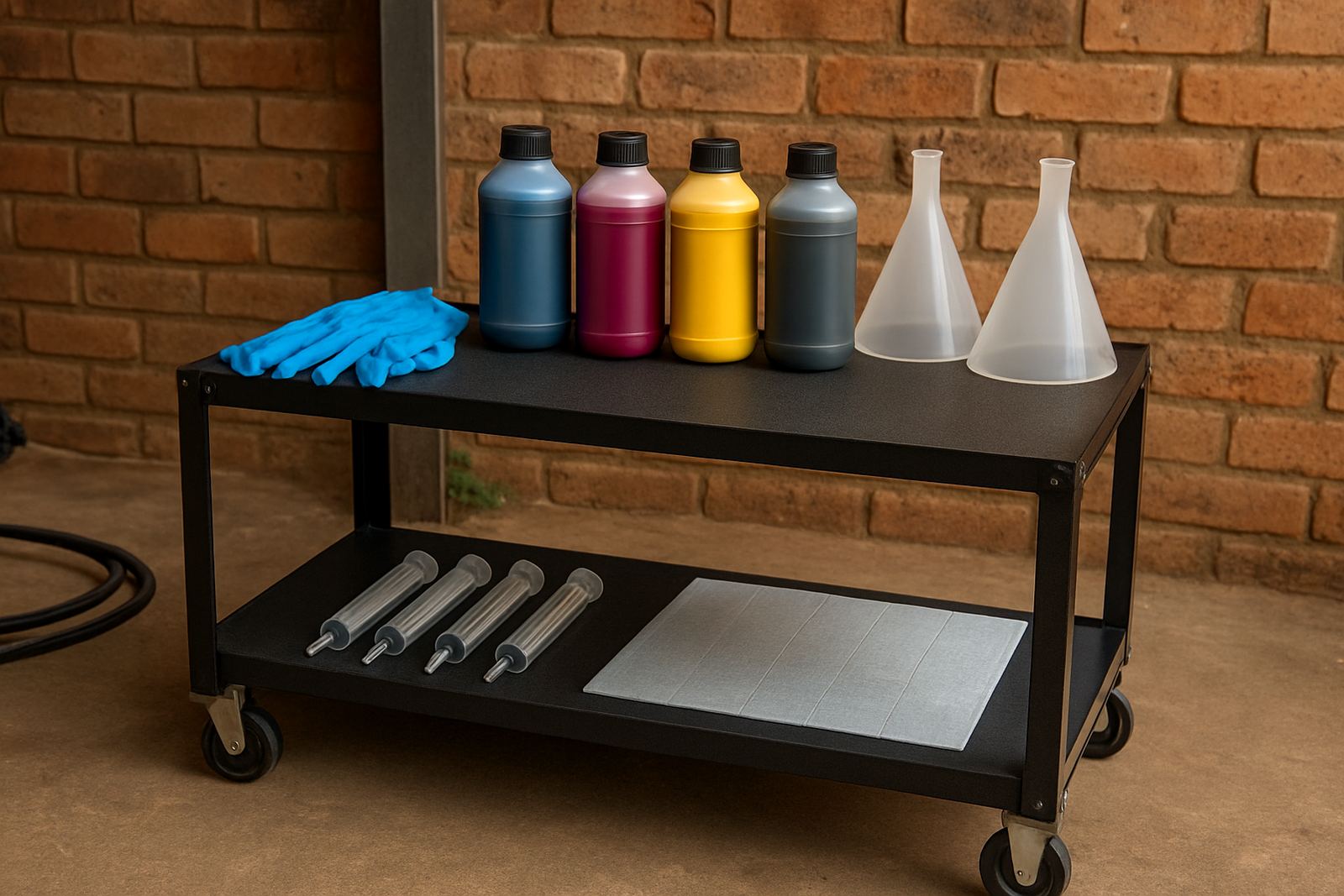
Good refill work starts before the bottle is opened. Choose a flat surface with enough room for the ink bottle, refill bottle, funnel or syringe, lint-free cloths, gloves, and a waste tray. In Johannesburg and nearby industrial areas, dust builds up quickly, so wipe the area down first and keep paper, offcuts, and packing materials away from the refill point.
Switch off fans that can blow dust into open containers. If you are working during load-shedding, check that you still have enough light to see fill levels and colour labels clearly. A small torch or a battery light helps when the workshop goes dim. Keep the printer carriage area clear too, because loose caps and cloths often end up near the machine and cause extra handling later.
- Use a level surface with good lighting.
- Keep caps, nozzles and tools in one clean tray.
- Lay out only the bottle you are filling and the ink you need.
- Keep food, drinks and packaging off the refill area.
Check the Ink, Bottle, and Label Before Decanting
Before you pour, confirm that the ink matches the printer and colour set you are using. Many refill mistakes happen because a bottle gets placed in the wrong tray or a label is missing after stock movement. Check the colour name, batch note if used, and whether the bottle is for desktop or wide-format use. Do not rely on bottle size alone, because similar containers can look the same once they are out of the carton.
Inspect the bottle for leaks, cracked caps, or a damaged seal. If the ink has been standing in a warm storeroom, mix it gently by the approved method before use. Do not shake hard if that creates bubbles, as bubbles can make filling slower and less tidy. In coastal areas with higher humidity, keep lids closed while you work so you do not leave openings exposed longer than needed.
- Match the ink to the correct printer and colour channel.
- Confirm the label is readable before opening.
- Check the bottle neck, cap, and seal for damage.
- Keep lids on until the moment you refill.
Refill Slowly and Keep the Flow Under Control
Open one container at a time and pour slowly. A steady flow gives you better control, especially on smaller desktop bottles where the neck opening is narrow. If you are using a syringe or funnel, hold it steady and avoid overfilling. Stop before the bottle reaches the top so there is space for handling and for the first few uses after filling.
If the bottle has a fill line, use it. If it does not, leave a sensible headspace rather than filling to the brim. Wipe drips immediately with a lint-free cloth. Small spills are easier to manage at once than after they have spread across labels or caps. If ink reaches the outside of the bottle, clean it before it is placed back in storage or packed for delivery, otherwise your stock shelves pick up stains and you waste time sorting through marked containers.
- Pour in a controlled, slow stream.
- Leave headspace for safe closing and handling.
- Wipe the bottle neck and outer surface at once.
- Close the source bottle before moving to the next colour.
Close, Mark, and Store the Bottle Correctly
Once the refill is done, close the cap firmly and check that the seal is seated properly. A loose cap can lead to leaks in transit, especially on courier runs between Johannesburg, Pretoria, Randburg, Midrand, Roodepoort, and the East Rand. Wipe the outside again if needed, then make sure the label still shows the correct colour and use status.
If you move stock between shelves or prep areas, keep each colour together and avoid mixing partial bottles. Clear marking helps the team plan usage and reduces confusion during busy shifts. In a trade setting, this matters when several jobs are running at once and someone else needs to pick the right bottle quickly. Store inks upright in a cool area away from direct sun and away from grinding dust, glue vapours, or open cleaning fluids.
- Close each cap tightly after filling.
- Check for residue around the neck and threads.
- Keep colours separated and clearly marked.
- Store upright in a cool, dry place.
Clear the Line and Watch for Early Warning Signs
After a refill, do a quick line check before you start production. If the machine has been sitting idle, run the recommended check routine and watch the first output closely. Uneven flow, colour drop-off, or air in the line can show that a bottle was not seated well or that the channel needs attention. Catching this early saves fabric, transfer paper, and time.
Keep your cleaning cloths and waste container nearby so you can deal with minor issues as they appear. If a line has been opened for refilling, keep note of which channel was touched and when. That small record helps when a job needs troubleshooting later, especially if your team handles garments, promotional work, or screen printing support where colour consistency matters from one batch to the next.
- Run a quick output check after refilling.
- Look for bubbles, weak colour, or uneven flow.
- Record the channel and refill date if you track stock.
- Keep cleaning items close for small corrections.
A Simple Refill Checklist for Daily Use
Use the same order every time and the work gets faster. A repeatable method keeps your team calmer on busy mornings and helps new staff learn the process properly. It also reduces avoidable handling mistakes when orders are moving out quickly for local delivery or nationwide courier collection. If your shop works across several print jobs in a day, a short checklist can prevent the usual mix-ups between colours, bottles, and machine lines.
Keep this as your daily routine before and after each refill. It does not need to be long, only consistent. The cleaner the process, the less time you spend sorting out spills, mismatched caps, and uncertain labels. For trade customers, consistency is what keeps the next print run predictable and the workshop easier to manage.
- Clean the refill area.
- Confirm the correct ink and printer type.
- Open one bottle at a time.
- Pour slowly and stop before overfilling.
- Wipe the bottle and close it properly.
- Check the line and note any issues.
- Return stock to the correct shelf.
If you need help choosing the right ink or checking compatibility, use the enquiry form on our contact page. Our team in Kya Sand supports trade customers with refill guidance, stock planning, and colour troubleshooting for businesses across South Africa.