Why cycling wear needs the right ink
Cycling apparel is judged quickly. Riders notice colour fade, weak blacks, patchy transfers and blurred sponsor logos straight away. Jerseys are often made from polyester or blended technical fabrics, so the ink has to move cleanly through the print process and stay bright after heat press curing and many wash cycles.
For teams, clubs and custom apparel shops, the biggest issue is consistency. A single run may include different sizes, multiple names, striping, race numbers and sponsor blocks. If the ink shifts from one batch to the next, the final kit can look mismatched. That becomes a problem on race day and in repeat orders from the same client.
In Johannesburg and other inland areas, dry conditions can help storage, but dust and inconsistent shop temperatures can still affect day to day output. Near the coast, humidity can change how paper and garments behave, so operators need a stable workflow and good stock control. For cycling wear, that means choosing an ink that gives even coverage, clean edges and reliable colour after heat application.
Typical print setup for cycle kit production
Most cycling wear jobs are printed on polyester panels before cut and sew assembly. A shop may run a desktop printer for sample work and short runs, while a wider-format printer handles larger graphics, repeated sponsor panels and full garment layouts. The print room usually also includes heat press equipment, cutting tables, transfer paper, design files and cleaning materials.
- Desktop printer for sample jerseys, names, numbers and proof prints
- Wide-format printer for repeated panels, gradients and full artwork sets
- Heat press for transfer onto polyester fabric sections
- Design station for sizing, nesting and colour checks
- Cleaning cloths and line maintenance tools for regular nozzle care
- Stock shelves for ink, paper and finished transfer jobs
For a business in Kya Sand, Randburg or Midrand, a practical setup is one where the printer, press and cutting area are close together. That reduces handling errors and keeps printed pieces in order. On busy weeks, especially before weekend events, clear labels and job cards save time and stop mix-ups between club kits and retail orders.
Colour planning for jerseys, shorts and race kits
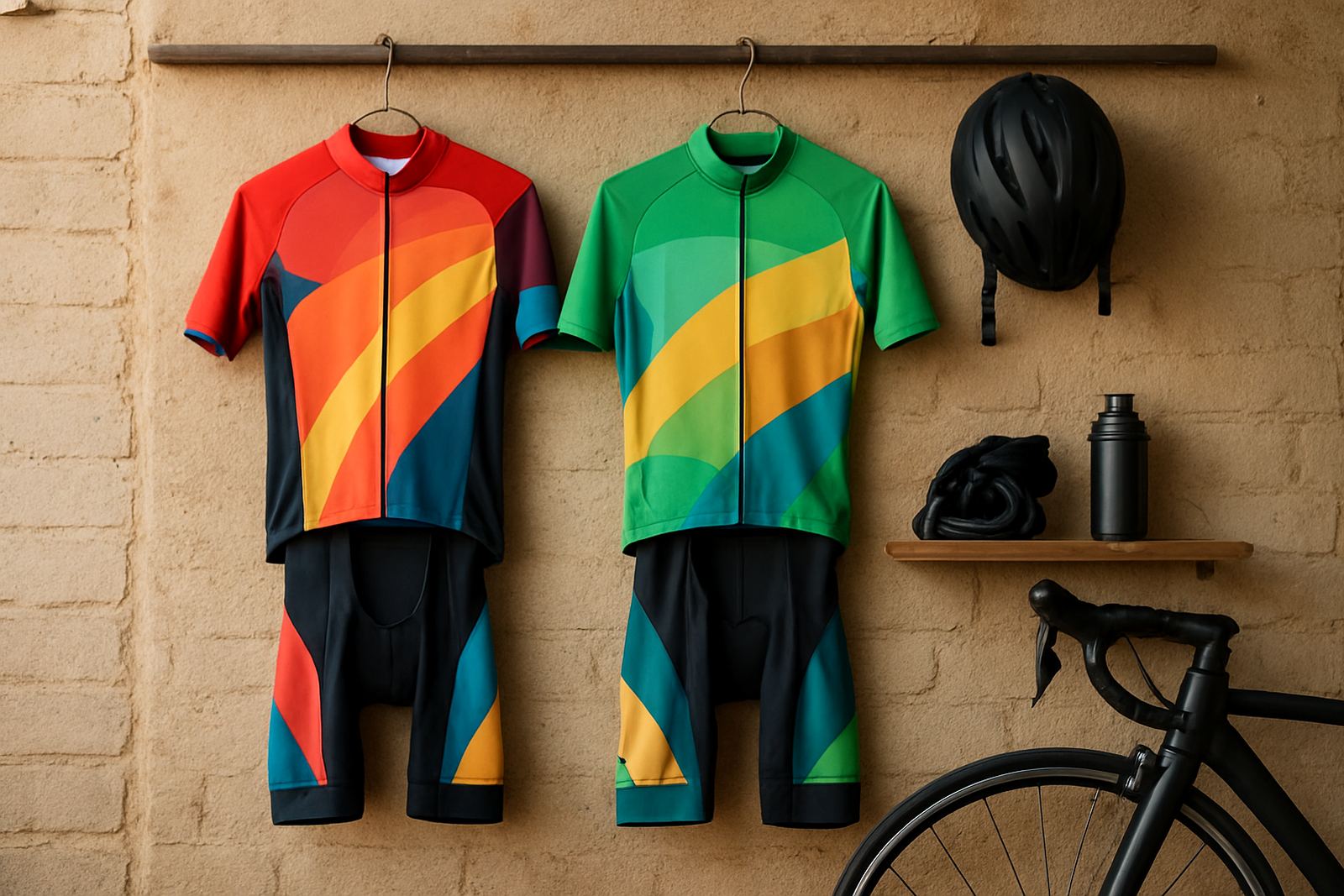
Cycling wear often uses bright accent colours, black panels and strong contrast lines. That makes planning important. A red jersey panel that looks fine on screen can print too dull if the colour values are not checked properly. The same applies to deep navy, fluorescent styles and small sponsor text. Good planning starts with a sample print and a clear approval process before the full run begins.
When handling multiple garment sizes, the artwork should be scaled carefully so logos remain readable on smaller panels. On bib shorts, placement matters because seams and stretch zones can distort fine detail. On sleeves and side panels, long text lines may need shortening or repositioning. This is where colour troubleshooting and compatibility checks help avoid waste.
- Test the main brand colours before printing the full set
- Check fine text at the smallest garment size first
- Allow for seam lines, zip placement and curved panels
- Keep sponsor blocks in the same order across every size
- Use sample orders for new fabrics or new garment suppliers
We often advise trade customers to keep a record of what worked on each fabric type. That makes repeat orders easier and helps when a client wants the same kit six months later for a new team member or replacement jersey.
Common mistakes on cycling apparel jobs
A lot of cycle wear problems come from rushed setup rather than the ink itself. A common mistake is printing without confirming the garment fibre content. If the fabric is not suitable for sublimation, the colour may sit poorly or look washed out. Another issue is skipping a compatibility check between the printer, ink and transfer paper, which can lead to weak saturation or inconsistent release.
Another problem is underestimating stock needs. Cycling teams often want extra jerseys in common sizes, and race season can bring urgent reorders. If the shop runs out of ink halfway through a batch, the colour on the next order may vary slightly from the first. Planning enough stock avoids that headache. It also matters for load-shedding periods, when delayed production can back up the whole queue.
Cleaning is often overlooked too. Nozzle issues, line air and blocked maintenance routines can show up as streaks or fading in solid blocks, which is especially noticeable on large jersey panels. We also see shops print too close to delivery dates without allowing time for pressing, inspection and correction. A proper drying and QC step can save a full reprint.
- Do not assume every polyester garment behaves the same
- Do not change ink batches mid order without checking colour first
- Do not leave maintenance until the printer starts missing lines
- Do not print team kits without approving the final artwork layout
Budget ranges for cycle wear print production
Budget depends on volume, garment count and how many colours or panels are involved. A small start-up printing a few sample jerseys or a short club run will usually spend less on ink than a busy shop producing multi-size team sets each week. For cycling wear, the real cost comes from repeatability, not just the first purchase price.
As a working guide, smaller trade orders for inks and support materials may sit in the few hundreds of Rand, while more regular production stock plans can move into the low thousands. Businesses that print weekly for clubs, schools, shops or event wear often prefer bulk planning so they are not caught short before a deadline. Courier across South Africa helps keep replenishment simple from our Johannesburg base.
For shops serving Sandton, Pretoria, the East Rand or outlying towns, it is worth keeping a buffer for unexpected client changes. A last minute size swap, a new sponsor logo or a colour correction can turn a neat job into an urgent one. We help customers choose stock levels that suit their order pattern, not just the current month.
If you are starting out, it is usually better to buy enough ink for a test phase, then scale up once the printer settings and garment range are settled. That keeps cash flow steadier and reduces waste. Larger operations can work with more structured stock planning, especially if they handle recurring team orders and seasonal race kit.
How we support cycling wear businesses
Our support is practical and trade focused. We help with ink selection, compatibility checks, colour troubleshooting, refill guidance and stock planning so your production runs keep moving. If a customer is new to cycling wear, we can talk through sample order options, line cleaning advice and what to check before printing a full team set.
For established print shops, the main goal is consistency. That means keeping colour stable across reorders, helping with bulk order support and making sure courier timing fits the work schedule. From Kya Sand we support customers in Johannesburg, Randburg, Roodepoort, Midrand, Sandton, Pretoria, the East Rand and nationwide. Next day courier is often possible for inks, which helps when a jersey run needs to go out fast.
- Ink Selection Help for jersey, bib and team wear jobs
- Compatibility Check for printer and garment combinations
- Colour Troubleshooting for faded or uneven prints
- Stock Planning for repeat club and retail orders
- Bulk Order Support for larger production runs
Cycling apparel is unforgiving, but when the process is set up well, the results are clean and durable. The right ink choice helps you keep the colour bright, the detail readable and the order on schedule.