When running vest orders need clean sponsor print
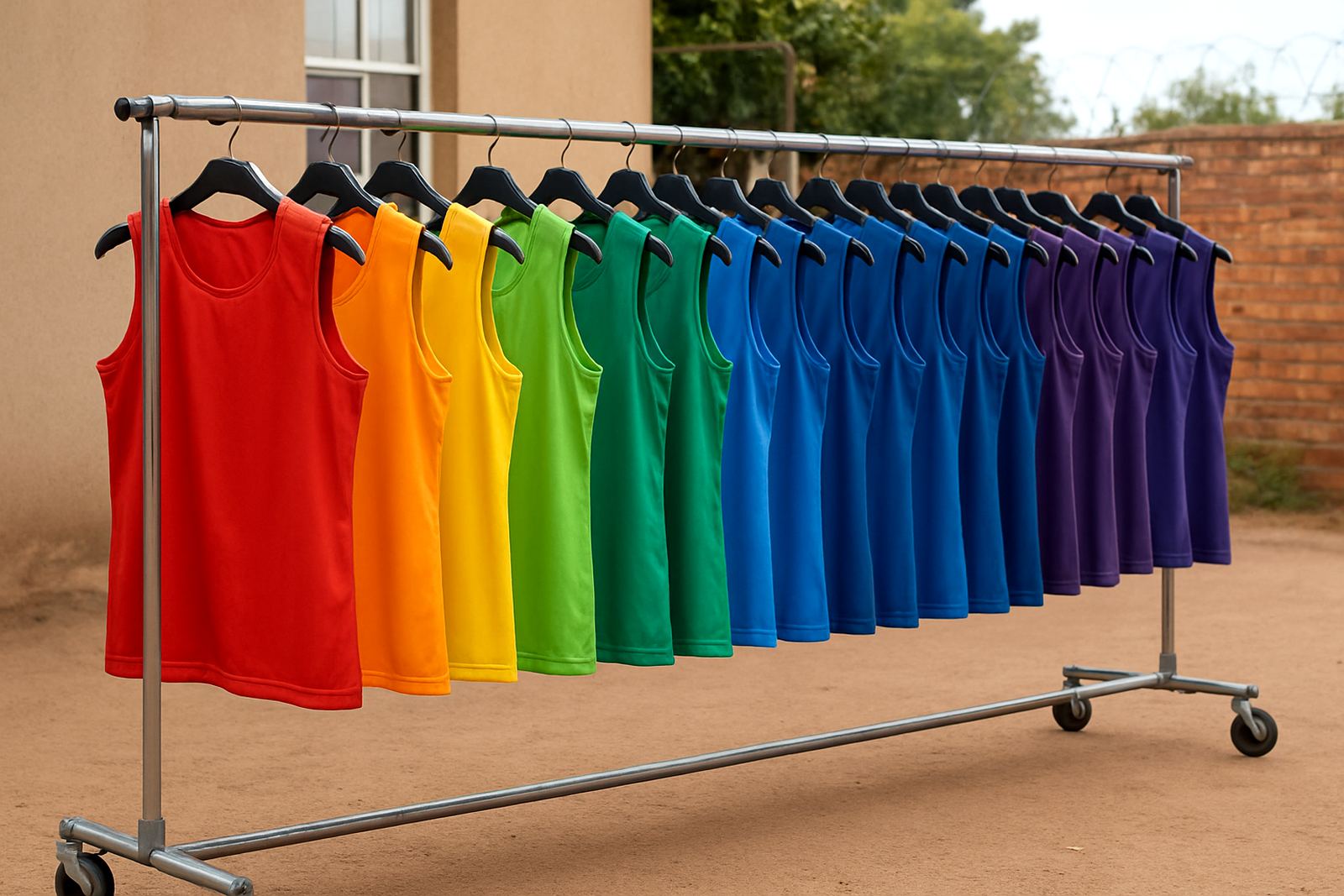
Running vests are usually judged in the first few seconds, so the print has to look sharp from a distance and still stay light on the body. Event organisers, athletics clubs and promotional suppliers often want bright colours, clear numbering and sponsor logos that do not crack after a few washes, especially when the garments go out to athletes training in heat, wind and dust.
Sublimation suits this job well because the ink bonds into the polyester surface rather than sitting on top of it. That gives you a lighter feel for the runner and less risk of heavy ink patches on the front or back panels. For vest orders in Johannesburg, Pretoria, Randburg and further afield, the main concern is usually colour repeatability across multiple batches and keeping the artwork legible on small print areas.
Typical printer setup for vest production
Most vest producers work with a modest setup first, then scale once the order flow is steady. A desktop printer is often used for samples, short club runs and testing colour. Wider format printers are better when you are lining up larger sponsor orders, matching multiple vest sizes or printing several panels at once. The key is using the right ink for the printer type and keeping the feed path stable, because banding on a vest front is hard to hide.
- Desktop printer for samples, one-offs and colour tests
- Wide-format printer for higher volume club or event work
- Quality transfer paper suited to light polyester garments
- Heat press with even pressure across the print area
- Pre-press garment inspection for dust, folds and moisture
- Cleaning supplies for line care and nozzle checks
If you are printing in a smaller shop, stock control matters just as much as the machine itself. A missed bottle during a Friday rush can push a race order into the weekend, so it helps to keep a few litres on hand and watch usage by print size rather than by guesswork.
Colour choices that work on light running fabric
Running vests usually use white, pale grey or bright polyester bases because they stay cool and show artwork clearly. That means the ink must deliver strong colour without muddying fine lettering or thin outlines. For sponsor blocks, club crests and race names, aim for solid fills and tested contrast rather than overcomplicating the layout. A simple print often reads better when someone is moving at pace.
In Kya Sand and nearby industrial areas, many businesses ask for artwork that handles repeated production without changing shade from batch to batch. That is where colour consistency and line cleaning become part of the job, not just the print itself. If the first set is vivid and the second set drifts, the customer notices straight away.
- Use high contrast text for race names and bib numbers
- Keep sponsor logos away from seams and armholes
- Allow for stretch on curved vest panels
- Test one sample before running a full club order
- Match the colour profile to your transfer and press settings
Planning artwork for small vests and fast turnaround
Vest layouts need a practical approach because there is less space than on a shirt and the panels often taper at the waist. It helps to set artwork margins early, then position sponsor marks so they do not disappear under a fold or side seam. If the vest will be used at road races, trail events or school athletics days, check whether numbers, names or club identifiers must remain visible from the front and back.
Late artwork changes are one of the biggest causes of delays. A logo moved 10 mm can be enough to upset a full run if the proof was already approved. We usually advise customers to keep one master layout for repeated vest sizes, then adjust only the name or race detail for each batch. It saves time and cuts waste, especially when load-shedding or courier delays have already squeezed the schedule.
Common mistakes on sublimated running vests
Most problems come from rushing the prep or using the wrong settings for the fabric. A vest can look fine on the screen but still print with dull edges if the heat press is uneven, the transfer is not aligned or the garment has moisture in it. Coastal humidity can also affect paper and storage, so it is worth keeping stock sealed and away from damp walls or open doors.
- Printing onto the wrong fabric blend
- Skipping a colour test before bulk production
- Placing artwork too close to seams or curved edges
- Ignoring nozzle checks and line cleaning
- Leaving transfers in a hot or damp store room
- Trying to save money by using poor quality ink
Another common issue is under-ordering ink for a fast-moving month. Club season and event season can run together, and one missed courier can hold up several different jobs. Our team helps customers plan stock so they are not caught short when a large order lands at the same time as a refill job.
Budget ranges for vest production in rand
The budget depends on garment count, print size and whether you are testing a new line or producing for a full event series. For smaller businesses, a starter ink budget for sample work and modest weekly output often sits from about R450 to R1 200, depending on how many colours you run and how much cleaning you do. Mid-volume print rooms working on club and promotional vest orders may plan between R1 500 and R4 500 for a more regular stock cycle.
For larger teams with wide-format output, sponsor-heavy artwork and consistent weekly dispatches, stock planning can move higher, especially if you keep backup bottles for peak periods. Bulk buying usually makes sense once you have repeat orders from clubs, schools or event suppliers, because downtime is more expensive than holding a bit of extra stock. The goal is not just cheaper ink, but fewer reprints and less wasted garment stock.
If you are comparing options, think about the full job cost, not only the price on the bottle. Include waste, test prints, courier time and the labour lost when colour needs correcting. That gives a far more honest picture for running vest work.
How we support vest printers from Kya Sand
From our Johannesburg base in Kya Sand, we support printers working on running vests with ink selection help, compatibility checks and advice on keeping colour steady across repeat orders. Customers in Randburg, Roodepoort, Midrand, Sandton, Pretoria and the East Rand can arrange courier delivery, and nationwide orders move by next-day courier of inks where possible. For trade clients, that means less time waiting and more time keeping production moving.
We also help with refill guidance, stock planning, line cleaning advice and bulk order support. If you are starting out with vest printing, or you are adding a new garment line to an existing shop, the enquiry form on our contact page is the easiest way to get practical help from our team. We can talk through the printer type, expected volume and the kind of artwork you are running so you choose the right product first time.